That frustrating moment when your drill bit tears out the back of a cabinet door or wanders off-target ruining hours of work? It’s almost always the wrong types of drill bits for wood. Choosing incorrectly transforms simple projects into disasters—splintered edges, misaligned dowels, or hidden wiring holes that look like animal chewed through them. With 7 core wood drill bit types (plus specialized variants), this guide cuts through the confusion. You’ll learn exactly which bit creates clean holes in hardwoods, drills perfect recesses for hinges, or powers through framing lumber—and avoid the #1 mistake 90% of DIYers make when selecting drill bits.
Brad Point Bits: Your Secret Weapon for Flawless Holes in Hardwood
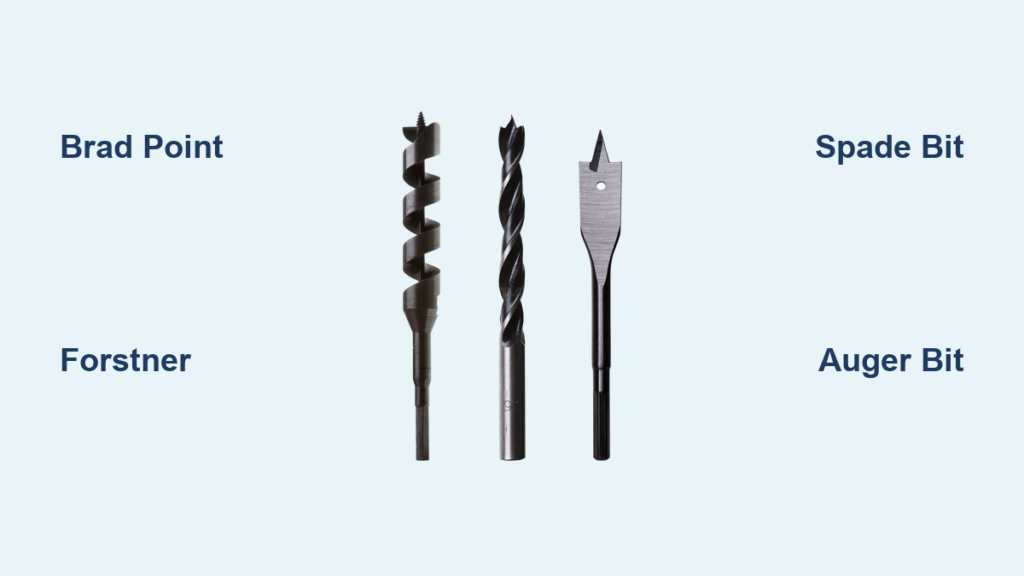
Brad point bits deliver surgical precision in fine woodworking where hole placement is critical. Their self-centering spike instantly bites into wood upon contact, eliminating “walking” that ruins delicate projects like chair legs or cabinet face frames. The sharp outer spurs score wood fibers before the cutting edge removes material, resulting in glass-smooth holes with zero tear-out on entry or exit surfaces. This is why professional furniture makers never attempt dowel joints without them.
Why Brad Points Outperform Standard Twist Bits
- Prevents wandering: The 15-degree center point anchors instantly on glossy finishes like polyurethane
- Eliminates blowout: Spurs cleanly cut wood grain before the flute removes chips (critical for veneered plywood)
- Ideal for: Cabinet shelf pin holes, hardwood dowel joints, and any visible hole where tear-out ruins aesthetics
Pro Tip: When drilling through hardwoods like oak, apply light downward pressure and let the bit’s spurs do the work—forcing it causes burning and tear-out.
Forstner Bits: Create Perfect Flat-Bottomed Holes Every Time
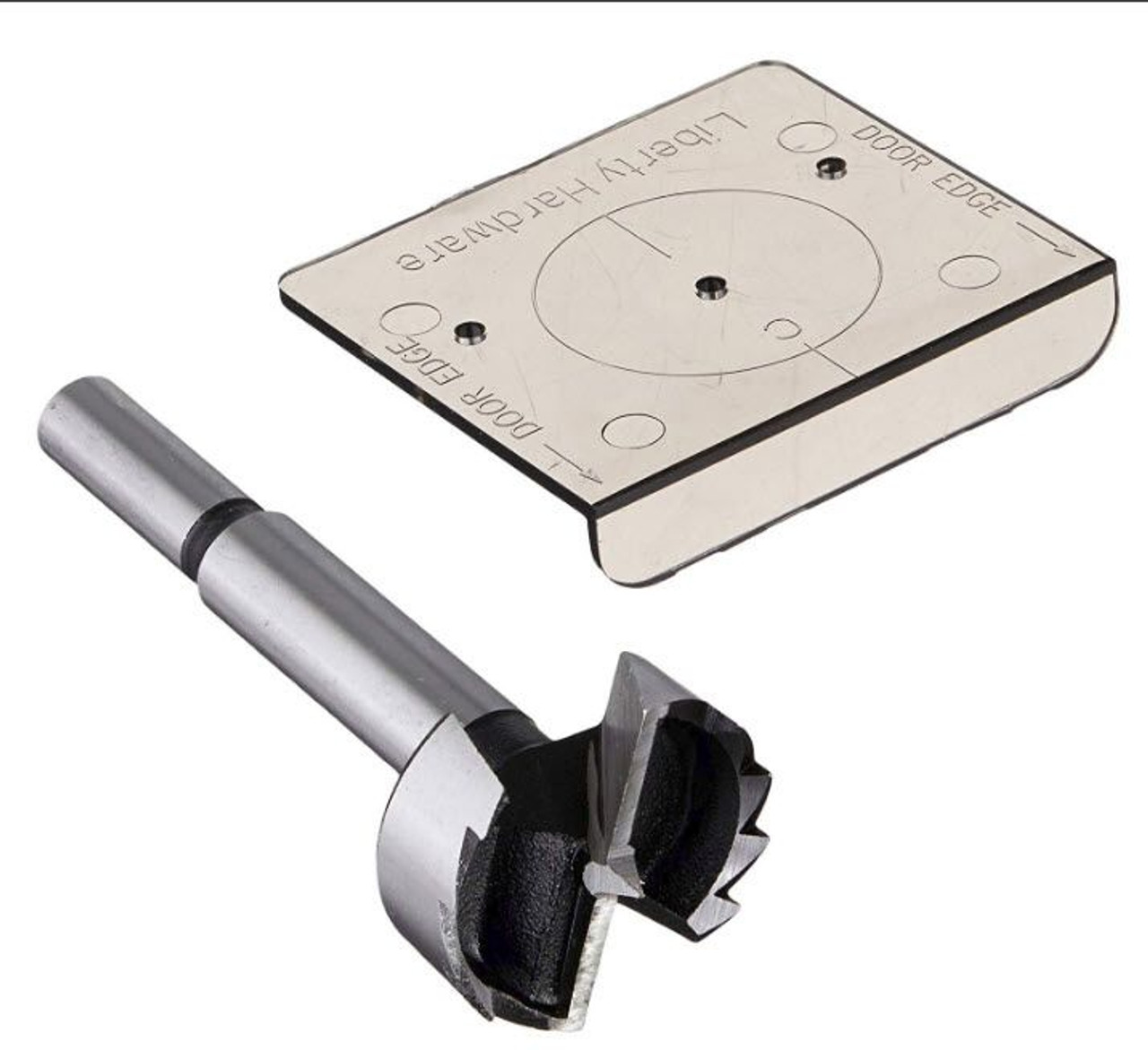
Forstner bits are non-negotiable when you need dead-flat hole bottoms for concealed cabinet hinges or inlays. Unlike any other wood drill bit type, they cut overlapping holes without walking and drill precise 90-degree angles even on curved surfaces like chair spindles. Their radial cutting rim shears wood fibers cleanly while the center spur guides alignment—no pilot hole needed. This makes them indispensable for high-end millwork where millimeter-perfect depth matters.
Critical Applications Where Forstners Shine
- Concealed hinge cups: Creates perfectly flat recesses so hinges sit flush (no wobbling doors)
- Inlay work: Drills stopped holes for marquetry without exiting through the back
- Angled drilling: Maintains accuracy when boring into chair legs or complex joinery
Warning: Always drill at 400-600 RPM—higher speeds cause burning in hardwoods. Stop every 1/4″ to clear sawdust for clean cuts.
Spade Bits (Paddle Bits): Drill Large Holes Fast for Hidden Projects

Spade bits are the construction site sprinters—engineered for speed when hole finish doesn’t matter. Their flat paddle design with a center point bores 1″-3″ holes through studs 3x faster than Forstners, making them ideal for running electrical cables or plumbing lines inside walls. But that speed comes at a cost: aggressive cutting causes significant exit-side splintering. Never use them for visible work.
When to Grab Your Spade Bit (and When to Avoid It)
✅ Perfect for: Drilling through 2x4s for wiring, creating drainage holes in outdoor projects
❌ Never use for: Furniture, cabinetry, or any project where the hole exit is visible
Pro Tip: Place scrap wood under your workpiece—the bit exits into the scrap instead of splintering your project.
Auger Bits: The Deep-Hole Drill Master for Timber Framing
Auger bits dominate deep-hole drilling thanks to their aggressive screw-tip feed mechanism. That sharp point pulls the bit through wood with minimal user pressure, preventing wandering in thick timbers. Single-spiral flutes efficiently eject chips even at 12″+ depths—critical for timber framing or installing long dowels. They outperform twist bits in depth accuracy but require low-speed drilling (300-500 RPM) to avoid overheating.
Why Augers Beat Twist Bits for Deep Holes
- Self-feeding action: Reduces user fatigue when drilling 6″+ holes in beams
- Chip ejection: Spiral flutes clear debris without frequent withdrawal
- Ideal for: Timber frame joinery, deep wiring runs in log homes, large-diameter dowels
Common Mistake: Using high speed causes burning. Always start at 300 RPM and increase only if chips flow freely.
Hole Saws: Cut Large, Clean Circles Through Wood Like a Pro
When you need a perfect 1.5″-6″ hole through wood, hole saws are the only solution. The pilot bit centers the rotating steel cup, which slices cleanly through material with its carbide-tipped teeth. They create smooth-walled openings for recessed lighting or sink drains but require steady pressure to prevent “chatter” that roughens edges. For cleanest results in plywood, drill halfway from both sides.
Hole Saw Hacks for Flawless Results
- Prevent binding: Back out every 1/2″ to clear sawdust (especially in MDF)
- Reduce splintering: Apply masking tape over the drill area before cutting
- Must-have sizes: 1-1/2″ (electrical boxes), 2-1/8″ (door knobs), 6-5/8″ (recessed lights)
Countersink and Plug Cutter Bits: Achieve Invisible Screw Joints
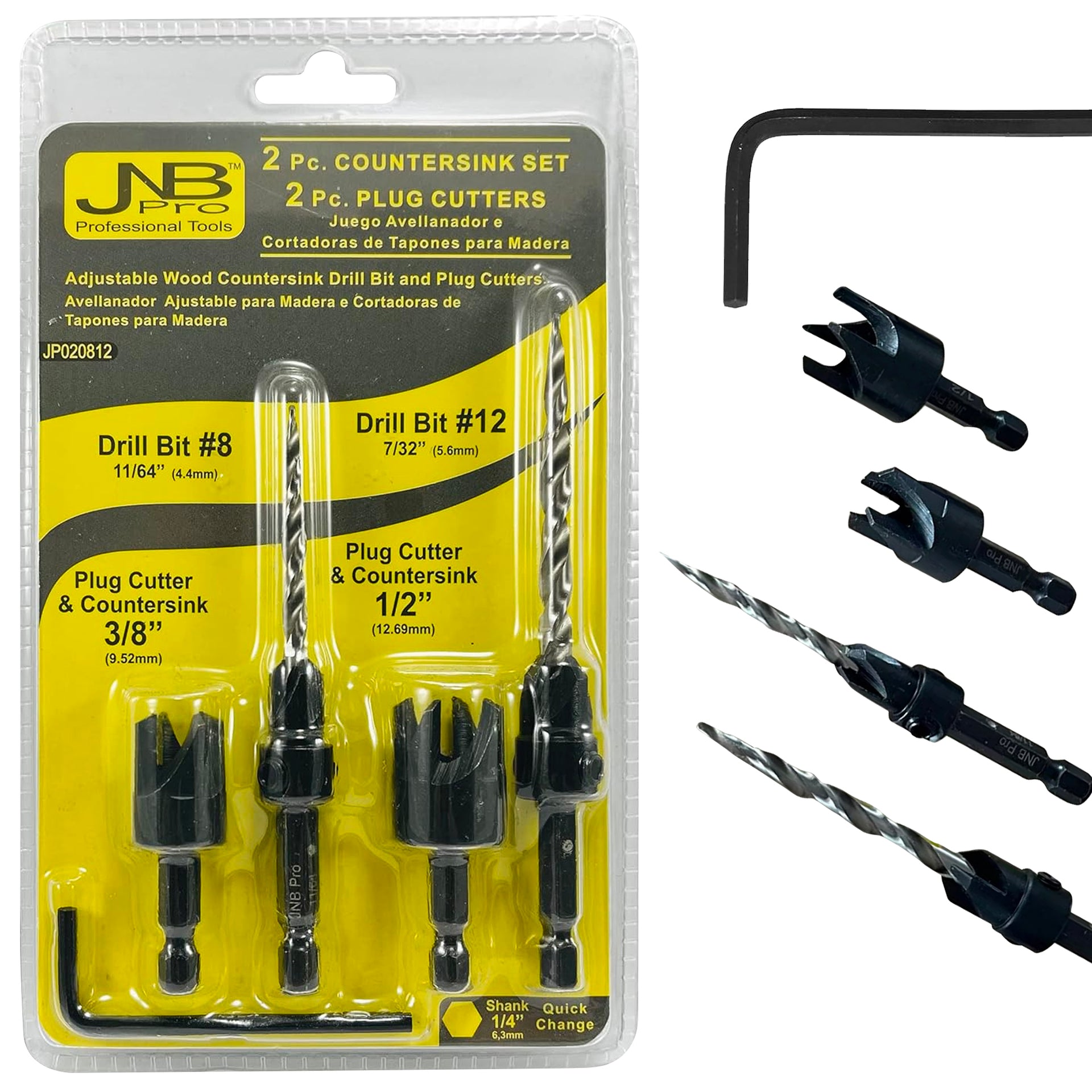
Countersink bits create professional-looking joints by drilling three elements in one pass: pilot hole, shank clearance, and conical recess for screw heads. Pair them with plug cutters—which slice matching wood plugs from scraps—to hide screws completely. This combo is essential for cabinet face frames or tabletops where visible hardware ruins aesthetics.
Step-by-Step for Invisible Repairs
- Drill countersink hole with pilot bit
- Drive screw until head seats in recess
- Apply glue to matching wood plug
- Tap plug flush with mallet
- Sand smooth for seamless finish
Pro Tip: Use plug cutters on the same wood species as your project—maple plugs in oak remain visible.
Multi-Spur and Screw-Point Bits: When Speed Meets Decent Finish
Multi-spur bits (like Bosch’s “Jobber” series) bridge the gap between spade and Forstner bits. Dual spurs score cleaner edges than spade bits while maintaining faster feed rates. Screw-point variants add an aggressive self-feeding tip for ultra-fast drilling in softwoods—but they splinter hardwoods violently. Reserve these for rough framing where speed trumps finish.
Multi-Material Bits: The DIYer’s Compromise (and When to Avoid Them)
Carbide-tipped multi-material bits handle wood, metal, and plastic but compromise wood-specific performance. Their optimized flute geometry for metal causes tear-out in plywood and splintering in hardwoods. Only use them for emergency repairs where dedicated wood bits aren’t available—never for fine woodworking.
How to Choose: Match 5 Critical Factors to Your Wood Drill Bit Type
Stop guessing which types of drill bits for wood to use. Apply this decision framework:
- Hole visibility: Visible holes = brad point/Forstner; hidden = spade/auger
- Wood type: Hardwoods = sharp brad points; plywood = Forstners to prevent delamination
- Depth required: >2″ = auger; shallow = brad point
- Bottom finish: Flat bottom = Forstner; through-hole = brad point
- Speed priority: Rough work = spade; finish work = Forstner
Time-Saver: Keep three dedicated sets: brad points (1/16″-1/2″), Forstners (1/2″-1-1/2″), and spade bits (3/4″-1-1/2″).
Top 3 Mistakes That Ruin Your Wood Drill Holes (and How to Fix Them)
Mistake #1: Using Dull Bits on Hardwood
Result: Burning, tear-out, oversized holes
Fix: Replace bits after 100+ hardwood holes. Test sharpness—if it doesn’t shave wood dust like pencil shavings, sharpen or replace.
Mistake #2: Forcing the Bit at High Speed
Result: Splintered exits, melted plastic laminates
Fix: Match RPM to bit type (brad points: 1,500+ RPM; Forstners: 400-800 RPM). Let the bit cut—not your pressure.
Mistake #3: Skipping Backing Boards
Result: Blowout on hole exit
Fix: Always clamp scrap wood behind workpiece. For veneered plywood, drill through into self-healing cutting mat.
Extend Bit Life: Simple Maintenance for Every Wood Drill Bit Type
- Clean after use: Wipe flutes with mineral spirits to remove pitch buildup
- Store properly: Keep in labeled case—never loose in toolbox where tips chip
- Sharpen selectively: Only sharpen brad points/Forstners (spade bits are disposable)
- Lubricate: Apply paste wax to auger flutes for smoother chip ejection
Final Takeaway: The right types of drill bits for wood transform frustrating projects into professional results. Invest in brad points for joinery, Forstners for cabinetry, and spade bits for construction—then match speed, depth, and wood type to your bit. Your next project won’t just survive drilling; it’ll showcase flawless holes that prove your craftsmanship. For quick reference, bookmark this bit selection cheat sheet: visible holes demand precision bits, hidden holes favor speed, and hardwoods always require sharp, specialized tools.