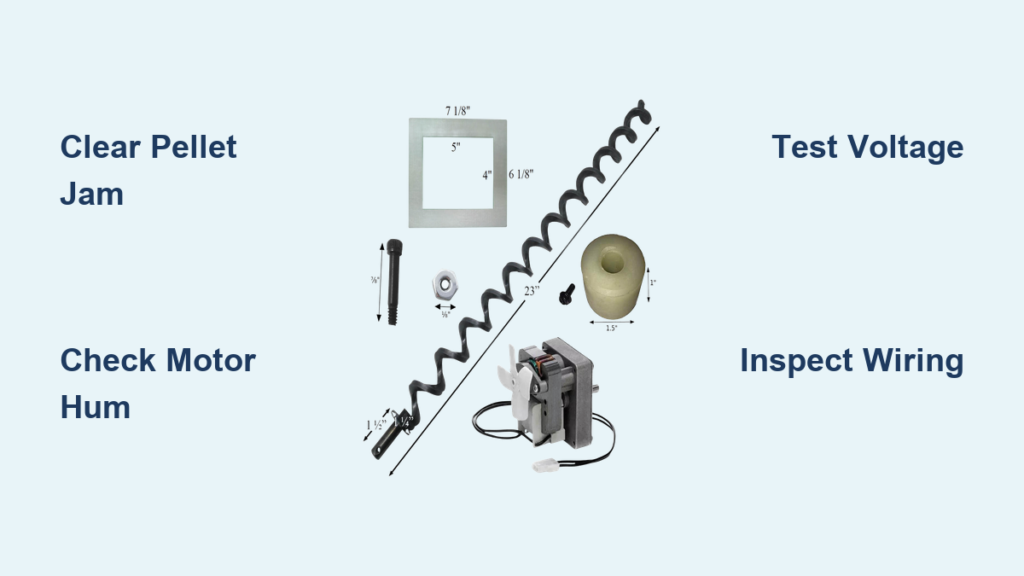
Your Traeger grill suddenly falls silent during a cook, the smoke stops flowing, and your brisket’s temperature starts dropping. The culprit? A frozen auger that’s stopped feeding pellets to the firepot. When your Traeger auger not spinning, your entire cooking experience grinds to a halt. This guide will help you methodically diagnose the problem, clear jams safely, and get your pellet grill back to perfect cooking temperature—without wasting another meal or calling for professional help prematurely.
Most auger failures stem from simple pellet jams or electrical connection issues you can fix in under 30 minutes. By following this step-by-step approach, you’ll avoid unnecessary part replacements and get back to grilling faster. Let’s dive into the specific troubleshooting steps that will identify and solve your auger problem.
Immediate Safety Steps Before Touching Your Traeger Auger
Power Down and Cool Before Inspection—never attempt auger repairs on a hot or plugged-in grill. Immediately turn off your Traeger and unplug it from the power source. Allow the grill to cool completely for at least 1-2 hours before proceeding. Working on a hot grill risks severe burns, especially near the firepot area where temperatures exceed 500°F during operation.
Perform Critical Visual Checks First before disassembly. Remove the hopper lid and inspect for obvious obstructions like a “pellet bridge” (where pellets form an arch that prevents flow) or large foreign objects. Shine a flashlight down the auger tube entrance to spot visible jams. Check that your hopper isn’t completely empty—sometimes the simplest solutions get overlooked when you’re frustrated mid-cook.
Diagnose Why Your Traeger Auger Motor Runs But Won’t Turn

Listen for Motor Humming While Grill Is On—this tells you whether power is reaching the system. Turn your Traeger on and set it to “Smoke” mode. Stand near the back of the grill where the motor is mounted. If you hear a faint humming sound but no pellet movement, you likely have a mechanical jam. No sound at all points to an electrical problem.
Conduct the Manual Rotation Test (Power OFF)
- Unplug your Traeger completely
- Locate the auger motor at the rear of your grill
- Find the metal coupler or set screw connecting the motor to the auger shaft
- Attempt to rotate this coupler by hand with a 1/4″ or 5/16″ wrench
If the shaft won’t budge, you have a severe jam. If it turns with extreme resistance, you’re dealing with a moderate pellet blockage. Free rotation indicates an electrical or motor problem rather than a jam.
Verify Controller Signals to Your Auger
Check if your control panel displays normally and reaches ignition temperature. The auger should cycle on and off in short bursts during normal operation. If your grill powers on but the auger never activates—even during the startup sequence—the controller might not be sending the proper signal. Try resetting your Traeger by unplugging it for 10 minutes before restarting.
Clearing a Stubborn Pellet Jam From Your Traeger Auger Tube
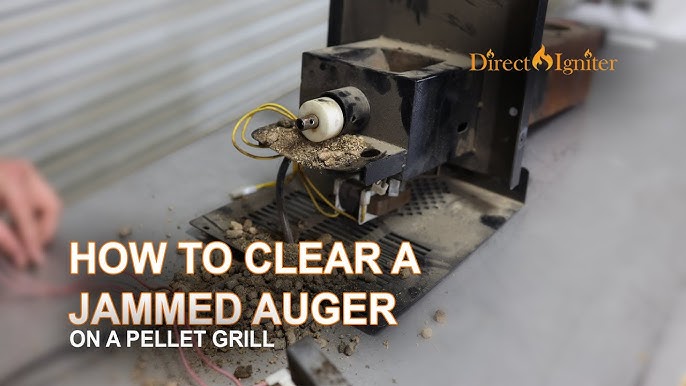
Remove Hopper and Access Auger Components Safely before attempting jam removal. Empty all pellets from the hopper into an airtight container. Remove the hopper assembly by loosening the mounting bolts (typically 3-4 bolts). Set aside the hopper guard and any protective covers to access the auger tube entrance.
Use Proper Tools for Effective Jam Removal
Never force objects into your auger tube with excessive pressure—that can damage internal components. Instead:
- Use a flexible wire cleaning rod to gently dislodge jams from the firepot end
- Try compressed air from the hopper side to blow out minor obstructions
- For stubborn jams, insert a 1/4″ steel rod into the tube and tap gently with a mallet
- Apply food-grade lubricant spray if moisture-swollen pellets are causing the jam
Critical Warning: Never use power tools like drills to force auger rotation—this can shear internal components and create more damage than the original jam. If you encounter extreme resistance, stop and consider partial disassembly rather than risking further damage.
Testing Your Traeger Auger Motor and Electrical System

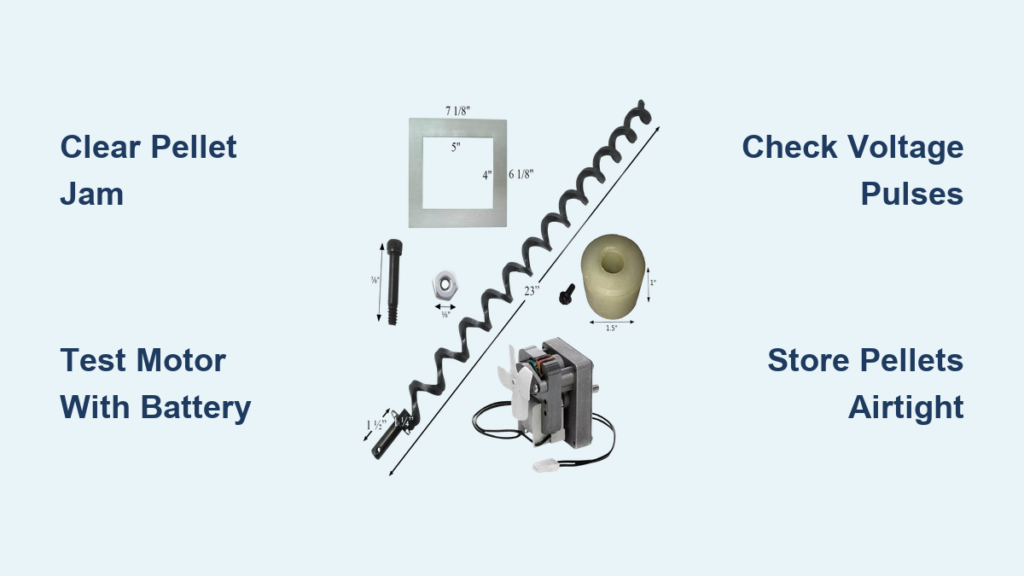
Check Voltage at Motor Terminals with Multimeter if you suspect electrical issues. With the grill plugged in and set to “Smoke” mode, carefully measure voltage at the motor connections. You should see approximately 120V AC during auger operation cycles. No voltage indicates either a controller problem or wiring issue between the control board and motor.
Identify Common Electrical Failure Points
- Inspect Wiring Harness Connections for corrosion or loose fittings—these are common failure points exposed to outdoor elements
- Test Motor Continuity by disconnecting wires and measuring resistance (should read 10-100 ohms)
- Check for Burnt Smells near the motor housing which indicate internal winding failure
If your motor hums but doesn’t turn and shows proper voltage, the motor itself has likely failed and needs replacement. Intermittent operation often points to failing motor brushes or a controller issue that requires professional diagnosis.
How to Prevent Future Traeger Auger Jams
Store Pellets in Airtight Containers with Desiccants to prevent moisture damage—the #1 cause of auger jams. Never leave pellets in the hopper between cooks, especially in humid environments. Moisture-swollen pellets lose their structural integrity and crumble into fine dust that cakes inside your auger tube.
Implement Essential Maintenance Habits
- After every 3-5 cooks, vacuum out the firepot and ash accumulation
- Monthly, inspect the auger tube entrance for pellet dust buildup
- Before seasonal storage, run your Traeger on “Clean” mode to clear residual pellets
- Quarterly, check and tighten all electrical connections to prevent corrosion
Pro Tip: Run your Traeger on “Smoke” mode for 10 minutes before adding food to verify proper auger function. This quick check prevents mid-cook disasters and lets you catch developing issues early.
When to Replace Your Traeger Auger Components
Identify Worn Auger Components Requiring Replacement by checking for these critical signs:
- Visible wear exceeding 1/8″ on auger flighting edges
- Shaft diameter reduction greater than 0.020″ from original spec
- Unbalanced rotation causing noticeable vibration during operation
- Repeated jams despite proper pellet quality and maintenance
Shear Pin Failure Indicates Underlying Problems—if you find a broken shear pin (the small metal pin connecting motor to auger), don’t just replace it. Investigate why excessive force occurred—usually a hidden jam or pellet quality issue. Replacing the shear pin without addressing the root cause leads to immediate re-failure.
When to Contact Traeger Support
If you’ve verified power to the motor, cleared all jams, and the auger still won’t spin after testing components, it’s time for professional assistance. Contact Traeger support with your grill model and serial number ready. Have documentation of your troubleshooting steps—they’ll often provide specific guidance before requiring a service visit.
Before calling, double-check these often-overlooked issues:
– High-limit safety switch tripped (common after grease fires)
– Pellet sensor malfunction causing false “empty hopper” readings
– Firmware glitches requiring a full factory reset
By methodically working through these diagnostic steps, you’ll solve most Traeger auger not spinning problems yourself. Start with simple jam clearance before moving to electrical tests, and always prioritize safety with unplugged, cooled equipment. With proper maintenance habits, you’ll minimize future disruptions and enjoy reliable pellet feeding for perfect cooks every time. Remember: most auger problems stem from preventable pellet quality or moisture issues—so invest in quality pellets and proper storage to keep your Traeger spinning smoothly all season long.