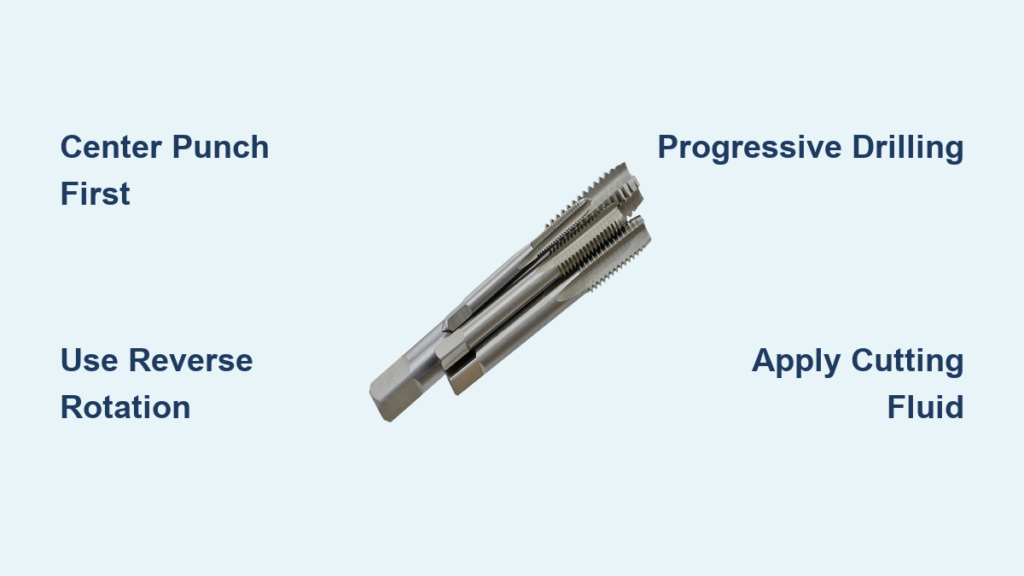
That moment when a bolt snaps off flush with your engine block or a screw head strips completely can send even experienced mechanics into panic mode. When standard extraction methods fail, a reverse drill bit becomes your secret weapon for salvaging projects without expensive professional help. Learning how to use a reverse drill bit properly transforms what seems like a catastrophic failure into a manageable repair. These specialized left-hand twist bits work counter-clockwise to extract broken fasteners that would tighten further with conventional drilling methods. In this guide, you’ll discover the precise techniques mechanics use to remove seemingly impossible broken bolts, saving hundreds in repair costs and keeping your projects moving forward.
Why Standard Drill Bits Make Broken Fasteners Worse
How Clockwise Rotation Tightens Instead of Loosens
When you attempt to drill into a broken fastener with a standard right-hand twist bit, you’re unknowingly applying additional torque that tightens the fastener further into its threaded hole. This clockwise rotation works against your extraction efforts, especially with corroded or seized fasteners. The physics is simple but counterintuitive: as the standard bit cuts into the broken fastener, it transmits rotational force that drives the fastener deeper rather than backing it out. This explains why so many DIYers make extraction problems significantly worse before realizing they need a different approach.
The Critical Difference Reverse Bits Provide
Reverse twist drill bits solve this problem by rotating counter-clockwise, applying unscrewing force as they drill. When properly engaged, these bits don’t just create a hole—they actively work to back out the broken fastener. In many cases, the reverse bit alone will extract the fastener during the drilling process, eliminating the need for additional extraction tools. This counter-intuitive approach leverages the same “lefty-loosey” principle you use when removing an intact bolt, but applies it directly to the extraction process.
Essential Tools for Successful Reverse Drill Bit Operation
Must-Have Equipment Beyond the Reverse Bit
Don’t attempt broken fastener extraction with just a reverse drill bit—your success depends on having the complete toolkit:
– Center punch and hammer for precise starting points
– Variable-speed drill with reverse function (corded preferred for consistent torque)
– High-quality cutting fluid or 50/50 transmission fluid/acetone mix
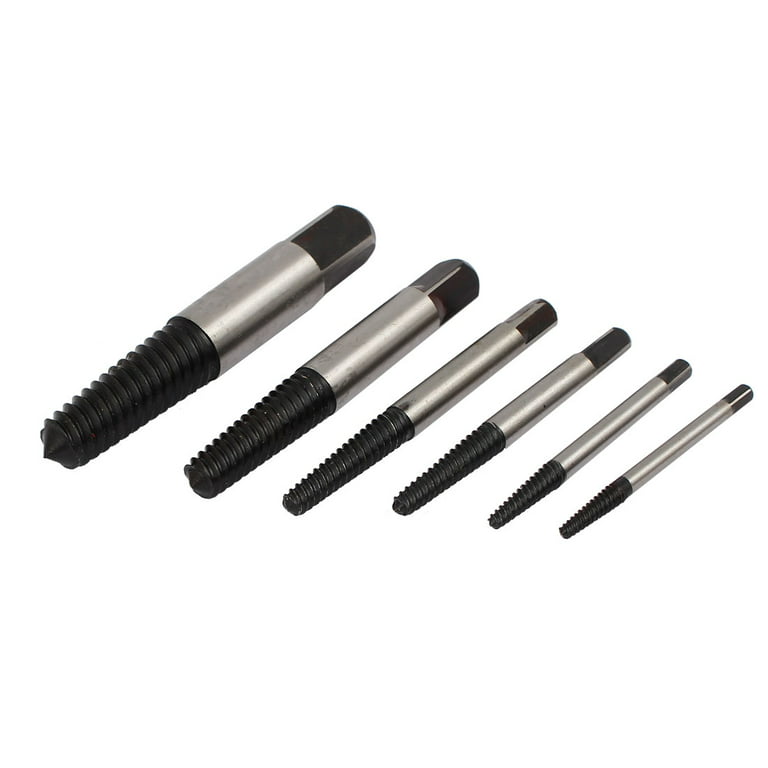
– Screw extractors (EZ-Outs) in matching sizes
– ANSI-approved safety glasses and cut-resistant gloves
– Bench vise or heavy-duty clamps to secure your workpiece
Choosing the Right Bit Size for Your Fastener
Selecting the correct reverse bit diameter is critical for success. Start with a bit approximately 1/3 the diameter of the broken fastener. For example, use a 1/8″ reverse bit for a 3/8″ bolt. The goal is to drill deep enough to create a solid grip point for extraction without compromising the structural integrity of the remaining fastener. Always have multiple bit sizes available—you’ll likely need to progress through several sizes during the extraction process.
Step-by-Step: Preparing for Broken Fastener Removal
Perfect Center Punch Technique
Your entire extraction effort lives or dies by your initial center punch. Locate the exact center of the broken fastener and create a deep, precise indentation with your center punch. This dimple prevents the drill bit from “walking” across the smooth surface of the broken fastener. For added precision, use a magnifying glass to verify your center point before striking the punch. A poorly placed center punch will lead to an off-center hole that makes extraction impossible.
Securing Your Workpiece Properly
Nothing sabotages extraction efforts like a moving workpiece. Clamp your component securely in a bench vise or use heavy-duty C-clamps to immobilize it completely. You need both hands free—one to control the drill and the other to apply steady downward pressure. If working on vehicle components, ensure the entire assembly is properly supported to prevent movement during drilling. Remember: any vibration or shifting will cause your bit to wander off-center.
Drilling the Pilot Hole: The Make-or-Break Step
Starting with Correct Speed and Pressure
Begin drilling at low speed (400-600 RPM) with moderate, consistent pressure. Never force the bit—let the cutting edges do the work. Apply cutting fluid liberally before starting and periodically throughout the drilling process. Watch for metal shavings rather than dust, which indicates proper cutting action. If you see smoke or the metal turns blue, you’re drilling too fast or applying too much pressure.
Avoiding the Most Common Beginner Mistakes
More reverse drill bits break from improper technique than material failure. Most critical error: applying sideways pressure while drilling. Maintain perfect alignment with your center punch mark. If the bit starts to bind, back off slightly while maintaining rotation—this clears chips from the flutes. If you feel excessive resistance, stop immediately, clear the hole, and reapply lubricant. Rushing this stage guarantees bit breakage and complicates your extraction problem tenfold.
Progressive Hole Enlargement: Avoiding Bit Breakage

When to Step Up to Larger Bit Sizes
Once your pilot hole reaches approximately half the fastener’s diameter, switch to the next larger reverse bit size. Continue this progressive drilling process until your hole reaches about 70% of the fastener’s diameter. This creates the optimal grip surface for screw extractors while maintaining enough material strength to transmit extraction torque. For stubborn fasteners, you may need three or more incremental drilling stages.
Recognizing Warning Signs of Bit Overheating
Watch for these visual cues that indicate you’re pushing too hard:
– Blue discoloration on the fastener surface (sign of overheating)
– Smoke rising from the drilling area
– Metal dust instead of clean metal shavings
– Excessive vibration in the drill
When you see these signs, stop immediately, clear the hole, reapply lubricant, and reduce your drilling speed. Allowing the bit to cool prevents work hardening of the fastener material, which makes extraction exponentially more difficult.
Extracting the Broken Fastener: Two Proven Methods
When the Reverse Bit Does the Work for You
In many cases, especially with lightly seized fasteners, the reverse bit will begin backing out the fastener during drilling. If you feel sudden decreased resistance or see the fastener starting to rise, immediately reduce drilling speed and apply gentle upward pressure with pliers or vice grips. Many mechanics miss this critical moment and accidentally drill completely through the fastener, losing their extraction opportunity.
Using Screw Extractors with Your Drilled Hole
For stubborn fasteners that won’t back out during drilling:
1. Tap your appropriately sized screw extractor firmly into the drilled hole with a hammer
2. Attach a wrench or socket to the extractor’s square drive
3. Apply slow, steady counter-clockwise pressure—never jerk or shock the extractor
4. If resistance increases dramatically, stop immediately to avoid breaking the extractor
Critical tip: Apply penetrating oil around the extractor and let it soak for 15 minutes before attempting extraction on severely seized fasteners.
Material-Specific Reverse Drilling Techniques
Stainless Steel Fastener Extraction Protocol
Stainless steel presents unique challenges due to its tendency to work-harden. When working with stainless fasteners:
– Reduce drilling speed by 30-50% compared to regular steel
– Use specialized cutting fluid designed for stainless steel
– Take frequent breaks to allow the material to cool
– Drill with smaller incremental size jumps between bits
Aluminum and Soft Metal Considerations
Soft metals like aluminum require different handling:
– Increase drilling speed slightly compared to steel
– Clear chips frequently to prevent binding
– Use shallower drilling depths per pass
– Apply continuous lubricant flow to prevent material adhesion to the bit
Safety Must-Dos When Using Reverse Drill Bits
Personal Protective Equipment Checklist
Never skip these safety essentials:
– ANSI Z87.1-rated safety glasses or full-face shield
– Cut-resistant gloves when handling sharp metal fragments
– Hearing protection for extended drilling sessions
– Dust mask when working with certain metals
Metal shavings from reverse drilling travel at high velocity in unexpected directions—your eyes are particularly vulnerable during extraction attempts.
Emergency Procedures for Broken Bits
If your reverse drill bit snaps off inside the fastener (a worst-case scenario):
1. Stop all drilling immediately
2. Clean the area thoroughly to assess the break point
3. Attempt to remove the broken bit fragment using a small pick
4. If unsuccessful, consider professional EDM (electrical discharge machining) services
Never attempt to drill around a broken bit—this almost always worsens the problem and requires more extensive repair.
Maintaining Your Reverse Drill Bits for Longevity
Proper Cleaning and Storage Methods
After each use:
– Wipe bits clean with a dry cloth
– Apply light machine oil to prevent rust
– Store in a dedicated case with individual slots
– Keep away from moisture and temperature extremes
High-quality reverse bits represent a significant investment—proper maintenance ensures they’ll be ready when you need them for your next extraction emergency.
Mastering how to use a reverse drill bit properly transforms you from a frustrated DIYer into a capable problem-solver who can handle one of mechanics’ most dreaded scenarios. The key to success lies in preparation, patience, and progressive drilling technique rather than brute force. When faced with your next broken fastener, remember that proper center punching, lubrication, and incremental drilling will serve you better than rushing the process. Keep your reverse bits sharp, your workpiece secure, and your drilling speed appropriate for the material, and you’ll extract even the most stubborn broken bolts with confidence. For severely seized fasteners that resist these techniques, consider combining heat application with penetrating oil for maximum effectiveness—your next extraction success story starts with these proven methods.