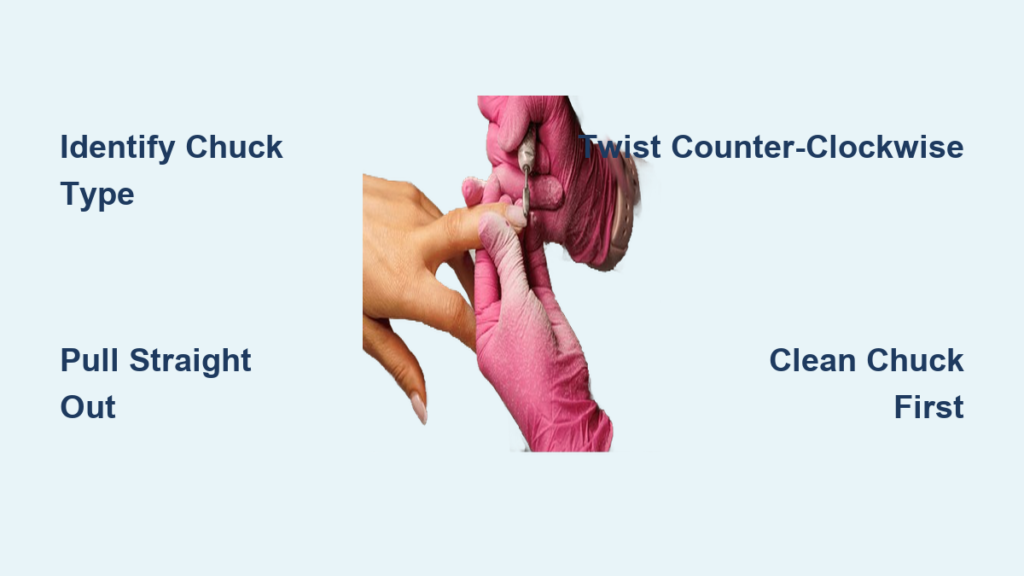
Your nail drill bit won’t budge, and you’re stuck mid-manicure with polish drying on your client’s nails. This frustrating scenario happens to every nail tech—especially when switching between coarse and fine bits during intricate work. Knowing how to remove bit from nail drill safely and efficiently saves time, prevents costly damage, and keeps your services running smoothly. Unlike power tools, nail drills use specialized chuck systems where forceful twisting or improper techniques can shatter delicate bits or jam the handpiece permanently. This guide cuts through the confusion with model-specific solutions drawn from real technician experiences. You’ll learn to identify your drill’s mechanism in seconds, remove even the most stubborn bits without pliers, and avoid the #1 mistake that ruins handpieces.
Identifying Your Nail Drill’s Chuck System Before You Pull

Your drill’s removal method depends entirely on its chuck design—get this wrong, and you’ll risk snapping bits or damaging internal mechanisms. Most modern e-files use one of two systems, but confusing them causes 90% of removal failures. Never assume your drill works like a colleague’s; brands like Harmony, Young Nails, and MiaSoleil use completely different systems.
Push-Pull vs. Twist-Lock: Spot the Difference in 10 Seconds
Push-in, Pull-out chucks dominate entry-level and mid-range drills. These have a smooth front with a tiny hole (about 1mm wide) where the bit inserts. There’s no rotating collar—just friction holding the bit. If your drill releases bits with a straight pull, this is your system. Twist-lock chucks feature a knurled metal ring or barrel near the tip that rotates 1/4 turn to lock bits. You’ll see visible threading or ridges on this collar. High-end drills like the LK Pro often use this design for secure bit retention during aggressive filing.
Field Test: Confirm Your Chuck Type Without the Manual
Since manuals get lost, perform this quick check: Hold your powered-off handpiece horizontally. Gently wiggle the inserted bit side-to-side. If it moves slightly before releasing with a firm pull, it’s push-pull. If it feels rigid until you twist the front collar counterclockwise, it’s twist-lock. Critical note: Never force rotation on push-pull systems—that’s how techs crack collets. If twisting does nothing and pulling fails, debris is likely jamming the chuck (we’ll fix this later).
Nail Drill Bit Removal Methods That Actually Work
Applying the wrong technique to your chuck type causes broken bits and service delays. These methods work for 95% of drills when matched correctly to your system. Always unplug your handpiece first—residual motor spin can fling bits across the room.
The One-Second Pull-Out Method for Push/Pull Chucks
This technique works for popular models like the Afile Mini and most budget drills. Do not twist or yank—that’s the #1 cause of stuck bits. Instead:
1. Power down and unplug the handpiece
2. Grip the bit’s shank (the smooth metal base, never the abrasive tip) between thumb and forefinger
3. Pull straight outward with steady pressure—like拔ing a cork from a bottle
Pro tip for slippery bits: Slide a rubber band over your fingertips for instant traction. For ultra-skinny bits (like 180-grit detailers), fold a microfiber cloth around the shank before pulling. If resistance feels like “sticky tape,” dust buildup is likely the culprit—clean the chuck first (see maintenance section).
Twist-and-Release Technique for Locking Chucks
Drills with twist-lock systems (common in ProBase and newer MiaSoleil models) require this precise sequence:
1. Power down and unplug
2. Locate the knurled collar—it rotates independently from the handpiece body
3. Hold the handpiece firmly in your non-dominant hand
4. Rotate the collar counterclockwise until it stops (usually 90 degrees)
5. Pull the bit straight out—no twisting motion
Critical warning: Some models like the Harmony E2 require pulling the collar forward while twisting. If your bit won’t release after full rotation, check for debris jamming the threads—forcing it shears plastic components.
Emergency Protocol for Stubborn Bits That Won’t Budge

When standard methods fail, follow these steps to avoid handpiece damage:
1. Clean first: Blow compressed air into the chuck or use the included brush to dislodge dust
2. Grip smarter: Wear a rubber glove or wrap the shank in a silicone jar opener
3. Pull correctly: Apply steady pressure for 5 full seconds—don’t jerk
4. Check alignment: Ensure you’re pulling perfectly straight (angled force jams bits)
If the bit still resists after 3 attempts, stop. Forcing it risks breaking internal magnets that hold bits in place—a common failure point requiring professional repair.
Rescue Tactics for Truly Jammed Nail Drill Bits
When bits refuse to release despite correct technique, it’s usually due to hardened acrylic dust or magnet failure—not user error. Never use lubricants; oil attracts more debris and gums up the mechanism. These field-tested solutions work when panic sets in mid-service.
Safe Pliers Technique: Last Resort Only
Only attempt this if the bit is visibly stuck after cleaning:
– Use nylon-jaw pliers (or wrap regular pliers in masking tape)
– Grip exclusively the metal shank—1/8 inch from the handpiece
– Apply even pressure while pulling straight out—never twist
Disaster alert: Gripping the abrasive section with metal pliers ruins the bit’s coating and creates dangerous shards. If the bit snaps, stop immediately—broken pieces inside the chuck require professional disassembly.
Hidden Culprit: The Jammed Magnet Mechanism
Some drills (like certain Young Nails models) use internal magnets to secure bits. If your twist-lock collar spins freely but the bit won’t release, the magnet may be jammed with metallic dust. Do not hammer or heat the handpiece. Instead:
1. Submerge the chuck tip in isopropyl alcohol for 30 seconds
2. Use a toothpick to gently clear debris from the collar threads
3. Rotate the collar while tapping the handpiece body lightly
If the magnet is permanently seized, replacement is cheaper than repair—most techs replace the entire handpiece ($25-$60).
Nail Drill Bit Removal Troubleshooting Cheat Sheet
Why won’t my bit come out after twisting?
Cause: Debris clogging the twist-lock threads—common with acrylic dust buildup.
Fix: Rotate the collar back and forth while blowing air into the gap. Never force past resistance.
Can I use WD-40 to loosen a stuck bit?
No. Lubricants attract more dust and degrade rubber O-rings inside the handpiece. Use only dry cleaning methods.
My bit snapped inside the chuck—now what?
Stop immediately. Do not insert tools. Broken bits often require ultrasonic cleaning by the manufacturer. Continuing service risks motor damage.
The pull-out bit feels “sticky” but releases slowly
This is normal for new drills with tight tolerances. Clean the chuck weekly with a brass brush to prevent gumming from product residue.
Pro Maintenance Habits to Prevent Stuck Bits Forever
The #1 reason bits jam isn’t user error—it’s neglected maintenance. Top technicians spend 30 seconds after every client preventing future headaches. These habits extend handpiece life by years and make how to remove bit from nail drill a non-issue.
Daily non-negotiables:
– Blow compressed air into the chuck after every bit change
– Wipe the bit shank with alcohol before insertion
– Store bits in labeled containers (never loose in drawers)
Monthly deep clean:
1. Remove all bits
2. Unscrew the chuck collar (if applicable)
3. Brush threads with a toothpick dipped in alcohol
4. Reassemble and test with a spare bit
Critical red flags:
– Grinding noises during removal = worn collet (replace immediately)
– Bits sliding out during use = weakened chuck spring (handpiece nearing end-of-life)
– Magnet resistance when inserting bits = internal failure (stop using)
Always match bit shank sizes to your drill—using 3/32″ bits in 1/8″ chucks causes micro-jams that worsen over time. Keep your manual’s contact info handy; brands like ProBase offer free video support for removal issues. When in doubt, pause service for 2 minutes to clean rather than force removal—you’ll save hours of repair downtime later. By mastering these techniques, you’ll transform bit changes from stressful interruptions into seamless transitions between clients.