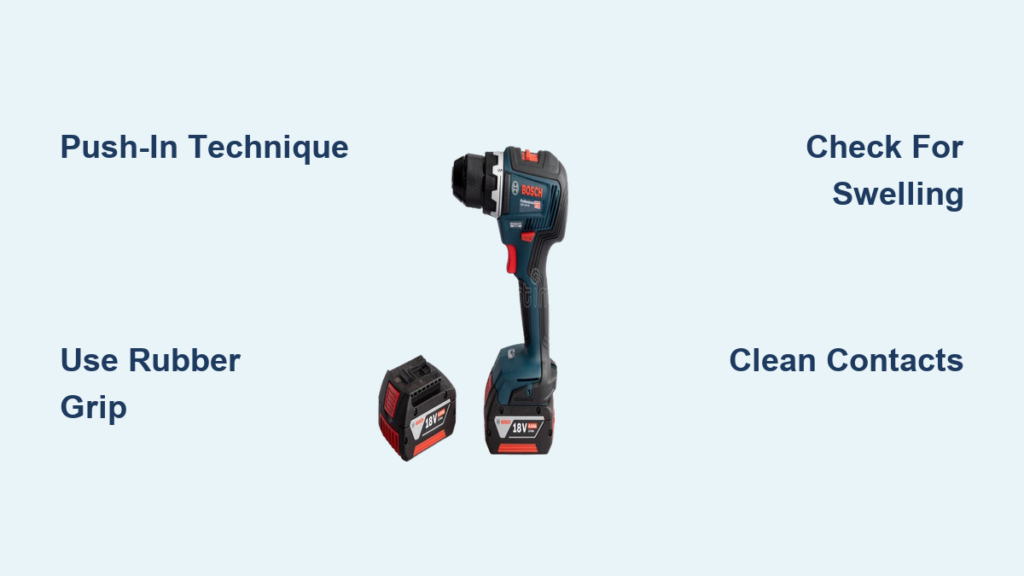
That frustrating moment when your Bosch drill battery refuses to budge is all too familiar for many DIYers and professionals. Whether you’re trying to swap batteries mid-project or need to charge your 12V or 18V pack, a stuck battery can bring your work to a halt. This comprehensive guide delivers proven methods to safely remove a stubborn Bosch drill battery without damaging your tool or risking injury. You’ll discover why Bosch batteries get stuck, the safest removal techniques for different scenarios, and how to prevent this problem from recurring—saving you time, frustration, and potentially costly repairs.
Why Your Bosch 12V Battery Won’t Release From the Drill
Bosch’s tight battery fit isn’t accidental—it’s a design feature that often becomes a frustration. Users consistently report needing 15-20 pounds of force to remove newer Bosch 12V batteries, particularly those with 2.0 amp hour capacity or higher. The root causes include manufacturing tolerances that have tightened in recent years, making newer models significantly harder to release than older versions. Temperature changes cause plastic components to expand and contract, temporarily increasing friction between the battery and tool. Workshop debris like sawdust acts as an abrasive paste in the contact area, binding the battery in place. Older users and those with arthritis face particular challenges, as the required force exceeds what many can comfortably apply.
How Temperature Affects Your Bosch Battery Fit
Cold workshop conditions cause plastic components to contract, creating an even tighter fit that makes battery removal nearly impossible without proper technique. Conversely, working in hot environments causes expansion that can lock the battery in place. The most problematic scenario occurs when moving tools between temperature zones—taking a cold drill into a warm workshop creates condensation that dries into a sticky residue in the battery compartment. If your Bosch drill has been stored in a garage during winter, expect significantly more resistance when attempting battery removal until the tool reaches room temperature.
Identifying Dangerous Swelling Before Attempting Removal
Before applying any force, inspect your battery for swelling—a critical safety concern. A compromised lithium-ion battery will appear puffy or misshapen, with case seams separating slightly. If you notice any bulging, discoloration, or unusual warmth, do not attempt removal. Swollen batteries pose fire and chemical hazards that require professional handling. Gently press along the battery’s edges; if you feel soft spots or uneven surfaces, set the tool aside in a fireproof container and contact Bosch support immediately. Never force a swollen battery from its compartment, as puncturing the casing could trigger thermal runaway.
Critical Safety Steps Before Attempting Battery Removal
Safety must come first when dealing with stubborn power tool batteries. Always wear ANSI-approved safety glasses to protect against flying debris or potential battery acid if the casing cracks during removal. Equip yourself with heavy-duty work gloves that provide both grip and protection from sharp plastic edges that may develop over time. Before touching the release mechanism, visually inspect the battery-tool interface for visible damage, debris, or signs of overheating. If you detect any burning smells, unusual sounds when pressing the release button, or visible damage to electrical contacts, stop immediately and seek professional assistance.
Essential Protective Gear Checklist
- ANSI Z87.1 certified safety glasses
- Heavy-duty mechanic’s gloves (not cloth work gloves)
- Fire-resistant container for compromised batteries
- Non-conductive tools (plastic pry bars, not metal)
- Eye protection rated for chemical splash (if battery appears damaged)
Step-by-Step: Standard Battery Removal Technique for Bosch Drills

Start with the least aggressive method before progressing to more involved techniques. Locate the release button(s) on your Bosch battery—most 12V and 18V models feature one or two buttons on the top surface. Press and hold these buttons firmly while simultaneously pushing the battery slightly deeper into the tool. This counterintuitive “push-in” technique disengages the latch mechanism more effectively than pulling immediately. Maintain button pressure while gently rocking the battery side-to-side (not up-and-down) to break the static friction holding it in place. Finally, pull the battery straight out with steady, even pressure—never yank or twist.
Why the Push-In Method Works Better Than Standard Pulling
The push-in technique solves the core problem of incomplete latch disengagement. When you press the release button while simultaneously pushing the battery inward, you create clearance between the latch and its retaining groove. Many users fail because they pull while pressing the button, which actually increases pressure on the latch mechanism. The rocking motion breaks the molecular adhesion that develops between plastic surfaces during extended contact. For best results, apply this technique with your drill braced against a workbench—using your body weight rather than hand strength reduces strain on arthritic fingers while providing more controlled force.
Advanced Method: Using Tools to Remove a Stuck Bosch Battery Safely
When standard techniques fail, employ mechanical advantage with the right tools. Wrap a rubber jar opener around the battery for enhanced grip—this simple trick increases pulling force by 30-40% without risking damage. For severely stuck batteries, place a small block of softwood against the battery’s end cap and tap gently with a rubber mallet. The wood distributes force evenly while the mallet’s rebound action delivers controlled impulses that break static friction better than steady pressure. Never insert metal tools between battery and drill body; instead, use plastic pry tools against the battery casing’s reinforced edges only.
Safe Plier Technique for Extreme Cases (Use with Caution)
When all else fails, padded pliers can provide the necessary leverage—but require extreme care. Wrap the battery’s midsection completely in a soft cloth or rubber sheet to prevent casing damage. Use smooth-jawed channel locks (not needle-nose pliers) set to grip the battery’s widest point, padded with additional cloth. Apply gentle, oscillating pressure while maintaining release button depression—never apply continuous increasing force. The moment you feel movement, stop and complete removal by hand. This technique risks cracking the battery housing if overdone, so use only as a last resort before seeking professional help.
Troubleshooting: When Your Bosch Drill Battery Is Truly Jammed

If your battery remains immovable after standard techniques, investigate deeper issues. Shine a bright flashlight into the battery compartment to check for debris jams—sawdust accumulation is the most common culprit in workshop environments. Use compressed air to blow out the compartment, holding the tool upside down to let debris escape. If you see broken plastic fragments or misaligned latches, the release mechanism may be damaged. Apply a single drop of silicone spray (not WD-40) to the battery rails only—never on electrical contacts. Wait 5 minutes for the lubricant to penetrate before attempting removal again.
How to Identify a Broken Release Mechanism
A damaged release mechanism exhibits specific symptoms: the button feels spongy or doesn’t spring back, you hear grinding noises when pressing it, or the latch visibly protrudes from the battery compartment. In these cases, professional repair is usually required, as internal spring replacement demands disassembly that voids warranties. If your Bosch drill is under warranty, contact customer support before attempting any disassembly—many users report Bosch replacing problematic tools when presented with documented removal difficulties.
Proven Prevention Tips to Avoid Future Battery Sticking Issues
Prevent future frustrations with these maintenance techniques. Clean battery contacts and tool compartments monthly using isopropyl alcohol and cotton swabs—this removes conductive residue that increases friction. Apply a minuscule amount of dry Teflon lubricant to battery rails quarterly, wiping away excess to prevent dust accumulation. Store tools and batteries in climate-controlled environments between 50-77°F (10-25°C) to minimize thermal expansion issues. Most importantly, remove and reinstall batteries weekly even on infrequently used tools—this prevents the “set” that develops during prolonged contact.
The Monthly Maintenance Routine That Works
- Remove all batteries from tools and chargers
- Blow compressed air through battery compartments
- Clean electrical contacts with alcohol-dampened swabs
- Inspect release buttons for smooth operation
- Apply dry lubricant to battery rails (not contacts)
- Reinstall batteries, working the release mechanism 5 times
- Store tools with batteries partially inserted (¼ inch)
When to Contact Bosch Support for Battery Removal Problems
Contact Bosch immediately if you encounter persistent resistance requiring excessive force, visible damage to the release mechanism, or swelling batteries. Most users report positive experiences when documenting issues with photos and videos—Bosch often replaces problematic tools under warranty when presented with evidence of abnormal removal difficulty. Have your model number (typically PS31-2A, PS41-2A, or similar) and purchase date ready when calling. For drills under two years old, Bosch frequently provides free replacements rather than repair, recognizing this as a known design issue in certain production batches.
What to Say When Contacting Bosch Customer Service
“I’m experiencing abnormal resistance when removing batteries from my [model number] drill. It requires approximately [X] pounds of force, which exceeds the design specifications for safe operation. I’ve followed all standard removal procedures without success, and [describe any visible issues]. Could you assist me with warranty coverage for this mechanical defect?” Providing specific force measurements (many users measure with fish scales) significantly increases the likelihood of a favorable resolution.
By following these precise techniques, you’ll overcome even the most stubborn Bosch battery situations safely. Remember that prevention through regular maintenance is far easier than forced removal—incorporate these simple monthly practices to ensure smooth battery changes for years to come. Keep your drill ready for action by treating battery removal as part of your routine tool care, not just a frustrating obstacle when you need power most.