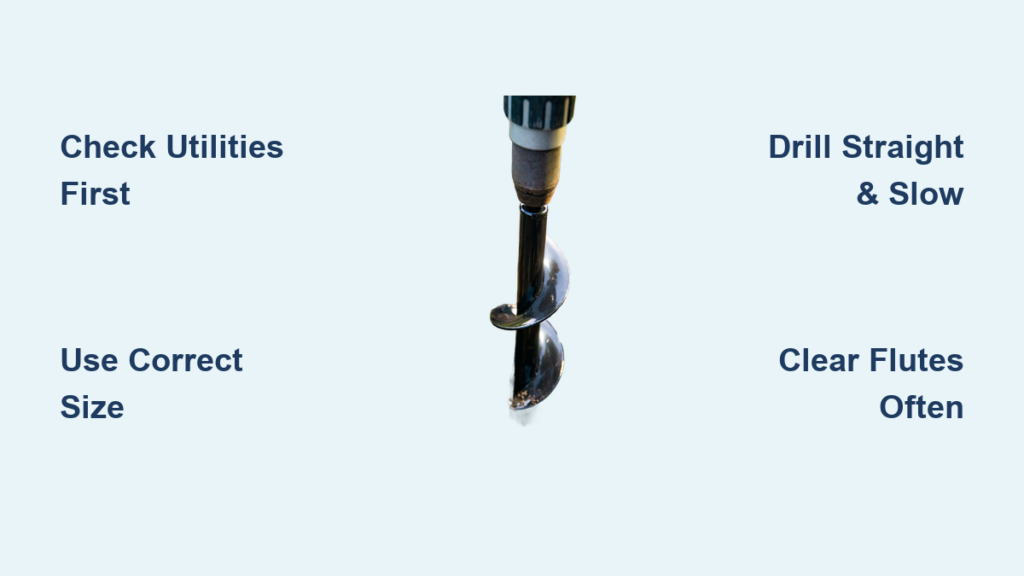
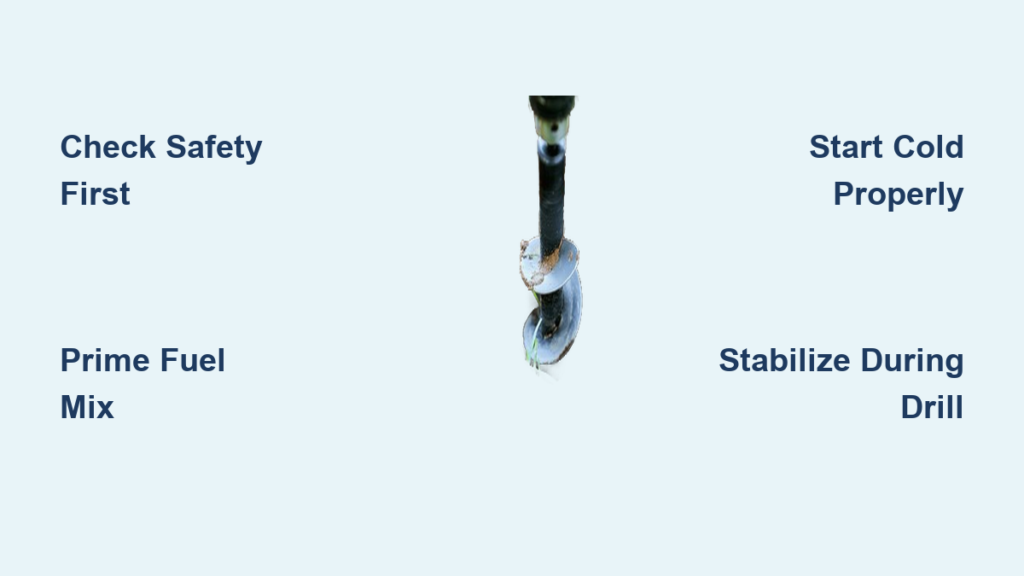
That stubborn fence post hole that should take minutes is turning into an all-day project with your shovel. You rented an earth auger to save time and your back, but now it’s sitting idle while you wonder how to operate an auger safely without damaging the machine or yourself. Many DIYers and contractors face this exact dilemma—powerful equipment that seems intimidating until you know the proper techniques. This guide cuts through the confusion with field-tested methods that transform your earth auger from a potential hazard into your most efficient digging tool. You’ll learn exactly what pros do to drill clean, straight holes every time while avoiding the three most common mistakes that lead to equipment damage and injury.
Auger Pre-Start Safety Checklist: 5 Critical Steps Before Digging

Before you even think about pulling that starter cord, complete these essential safety checks. Skipping any step risks equipment damage or serious injury when you operate an auger. First, conduct a thorough visual inspection of the entire machine. Look for cracks in handlebars, bent or dull auger bits, and loose hardware—especially the shear bolt connecting the bit to the drive shaft. This critical safety component must break cleanly if you hit an obstruction, preventing catastrophic torque transfer to your body.
Check your fuel mixture precisely according to your owner’s manual specifications (typically 40:1 or 50:1 gas-to-two-stroke-oil ratio). Never use straight gasoline in two-stroke engines as this causes immediate internal damage. Verify your gearbox oil level and ensure the air filter is clean and unobstructed. Finally, confirm your work area is safe—call 811 at least three days before digging to mark underground utilities, and clear the site of tripping hazards and bystanders. One missed utility line can cause explosions, electrocution, or costly service interruptions.
Why Your Auger Won’t Start: Common Fuel and Maintenance Errors
Many operators waste hours troubleshooting when their auger won’t start, only to discover preventable issues. The most frequent culprit? Incorrect fuel mixture—either wrong ratio or stale fuel older than 30 days. Two-stroke engines require precise fuel/oil ratios; deviating even slightly causes poor combustion. Another common mistake is neglecting the air filter, which restricts airflow and creates a rich fuel mixture that floods the engine. If your auger sputters but won’t catch, check these three items first: choke position (fully closed for cold starts), fuel freshness (must smell sharp, not sour), and spark plug condition (should have clean, dry electrode).
Cold Start Procedure: How to Fire Up Your Earth Auger Without Failures
Starting your auger correctly prevents frustrating stalls and extends engine life. For cold engines, set the on/off switch to “RUN” and move the choke to “FULL” position. Position the auger on firm, level ground with the bit clear of obstacles. Place your foot securely on the stabilizer step—never hold the machine while pulling the starter cord. Pull the starter rope with one smooth, firm motion about 75% of its full length; jerking or overextending the cord damages the recoil mechanism.
Once the engine fires, immediately move the choke to “RUN” position and let it idle for 60-90 seconds. If it stalls, repeat with slightly less choke. Never let the engine idle below 2,000 RPM during warm-up as this causes incomplete combustion and carbon buildup. Proper warm-up ensures optimal lubrication before applying load. Experienced operators listen for the distinctive change in engine tone that signals it’s ready for work—usually a smoother, higher-pitched sound.
Two-Person Auger Operation: Drilling Perfect Holes with Team Coordination
When you operate an auger as a team, communication prevents dangerous mishaps. The throttle operator (always positioned behind the machine) controls power and gives clear verbal commands like “Down in 3…2…1…DRILL.” The second operator acts as the ground anchor, stabilizing the machine and guiding bit placement without applying downward force. Position yourselves on opposite sides of the auger with feet shoulder-width apart for maximum stability.
Begin drilling by applying steady downward pressure only until the bit engages—then let the machine pull itself down. If the auger binds, the throttle operator should momentarily reduce power while the anchor lifts the bit 2-3 inches to clear packed soil from the flutes. For deep holes, stop every 18-24 inches to clear debris and check hole alignment. Critical mistake to avoid: Never let the second operator lean into the machine—that disrupts balance and causes crooked holes.
One-Person Auger Technique: Mastering Solo Operation Without Strain
Solo operators must compensate for the machine’s torque by adjusting stance and grip. Stand directly behind the auger with feet in a boxer’s stance—front foot slightly ahead for balance. Grip the handlebars firmly but not rigidly, allowing your arms to absorb vibration. Position the bit precisely where you want the hole, verifying vertical alignment with a level or plumb bob.
When engaging the throttle, apply just enough downward pressure to start the cut, then immediately reduce force as the auger begins pulling itself down. Counteract torque by shifting your weight rather than muscling the machine—lean back slightly as it drills deeper. For extraction, reverse the throttle briefly to break the bit’s grip before lifting straight up. Pro tip: On hard soil, make several shallow passes (6-8 inches deep) before attempting full depth to prevent binding.
Angled Hole Drilling: Creating Perfect Slope Installations Without Wobble

Drilling at precise angles for retaining walls or sloped fence lines requires specialized technique. First, create a starter notch with a digging bar at your desired angle—this guides the bit and prevents wandering. Position the auger so only the tip contacts the notch, then engage throttle at 50% power. Apply minimal downward pressure while supporting the machine’s weight with your body to maintain the angle.
The critical factor is patience—let the bit gradually pull itself in at the correct angle rather than forcing it. Stop every 6 inches to clear packed soil from the downhill side of the hole. If the auger starts to veer off angle, lift completely out and restart from the notch. Warning: Angled drilling generates extreme side torque—never attempt this with a poorly maintained shear bolt or on unstable ground.
Proper Shutdown Sequence: Preventing Costly Engine Damage After Digging
Shutting down correctly matters as much as starting properly when you operate an auger. After your final hole, let the engine idle for 60 seconds to cool internal components. Turn the ignition switch to “OFF”—never run the engine dry as this causes carburetor varnish buildup and hard starting. If your model has a fuel shutoff valve, close it and let the engine run until it stalls to prevent stale fuel issues.
While the machine cools, clean caked soil from the auger flutes and cooling fins using a stiff brush—never water, which can damage engine components. Inspect the shear bolt for damage and check all hardware for looseness. For storage longer than two weeks, add fuel stabilizer, run the engine for two minutes, then drain the carburetor according to your manual. Proper shutdown extends your auger’s life by 3-5 years compared to negligent operators.
Auger Safety Violations That Cause Serious Injuries Every Year
Your earth auger can inflict catastrophic injuries in milliseconds if you ignore these non-negotiable rules. Never place any body part near the rotating shaft—loose clothing, gloves, or fingers get instantly pulled into the gearbox. Always wear steel-toed boots, hearing protection, and safety glasses; flying debris causes 43% of auger-related eye injuries. The most deadly mistake? Skipping the 811 utility call—hitting a gas line causes explosions while striking electrical lines can electrocute you through the handlebars.
Watch for hidden hazards like buried rocks or roots that cause sudden kickback. If the auger jams, shut off immediately before attempting clearance—never pry while the engine runs. On slopes, always position yourself uphill from the auger to avoid being pinned if it slips. Remember: no post hole is worth your life. When in doubt, stop and consult your specific model’s manual before proceeding.
By mastering these professional techniques, you’ll transform from an anxious novice to a confident operator who can safely drill clean, precise holes in half the time. The key isn’t brute force but understanding how to work with the machine’s natural torque rather than fighting it. Keep this guide handy for your next project, and always prioritize safety over speed—your back (and your utility lines) will thank you. For model-specific details, consult your owner’s manual before each use, as features vary between brands and engine types.