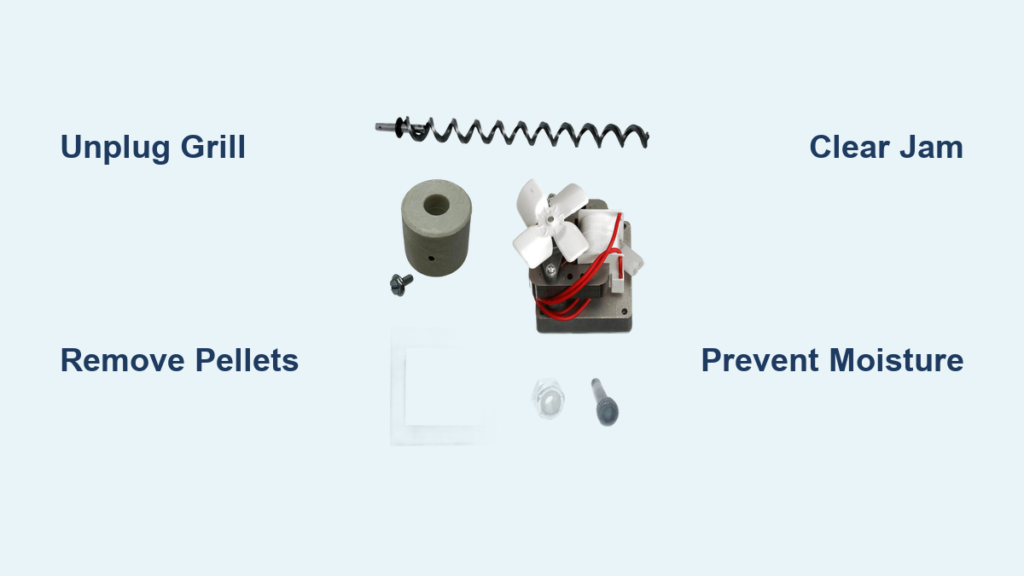
You’re ready for a perfect cookout when suddenly your Pit Boss grill sputters and dies. No flame ignites, the fire pot stays cold, and that familiar pellet-feeding whirr falls silent. Chances are, you’ve got a jammed auger—a frustratingly common issue caused by moisture-swollen pellets forming concrete-like obstructions. This critical component transports pellets from the hopper to the fire pot, and when it seizes, your entire cooking session halts. Ignoring this problem risks motor burnout, fire hazards, or even permanent damage to your grill’s feeding system.
Don’t panic—most auger jams are DIY-fixable in under 30 minutes with basic tools. This guide delivers a proven, step-by-step method to diagnose and clear your Pit Boss auger clog safely. You’ll learn how to identify the exact failure point, apply targeted clearing techniques without damaging components, and implement foolproof prevention habits. Whether you’re facing a minor pellet clump or a stubborn, torch-required blockage, these actionable steps will get smoke rolling again while extending your grill’s lifespan.
Essential Safety Steps Before Clearing Your Pit Boss Auger
Working on pellet grills demands serious safety precautions—pellet dust is highly flammable, and metal components retain heat long after shutdown. Start by unplugging your Pit Boss and waiting at least 2 hours for internal parts to cool completely. Never skip this step; residual heat in the fire pot can ignite debris during cleaning. Next, disconnect the igniter wire at the control board to eliminate accidental ignition risks. This small yellow or red wire connects to your hot rod igniter and should be unplugged before touching any internal components.
Critical Safety Gear Checklist:
– Heat-resistant gloves (leather or silicone) to handle metal parts
– Safety glasses to shield eyes from pellet dust and metal shavings
– Shop vacuum with HEPA filter (never use brooms—dust clouds can ignite)
– Fire extinguisher rated for grease/electrical fires within arm’s reach
Gather these tools before starting: Phillips and flathead screwdrivers, 7/16″ and 9/16″ sockets/wrenches, needle-nose pliers, hammer, and Allen keys. For severe jams, keep a propane torch and penetrating oil (like PB Blaster) ready—but use the torch only as a last resort in well-ventilated areas away from flammable materials.
Diagnose Your Pit Boss Auger Jam Accurately

Misdiagnosis wastes time and risks further damage. Before disassembling anything, confirm the auger is truly jammed versus a motor or electrical issue. Start your Pit Boss on “Smoke” mode and listen closely. If you hear the motor straining or grinding but see no pellets dropping into the fire pot after 2 minutes, you’ve got a mechanical obstruction. A silent motor with no pellet movement could indicate electrical failure—but first rule out the most common culprit: moisture-swollen pellets.
What Causes Your Pit Boss Auger to Seize?
Pellets absorb moisture from humid air or rain exposure, expanding up to 300% and fusing into a rock-hard mass inside the auger tube. This happens when:
– You leave pellets in the hopper during rainy weather (even with a cover)
– Low-quality pellets with high dust/fines content create sludge
– Grease or ash buildup narrows the auger tube over time
Check for visual clues: Remove the hopper lid and peer down with a flashlight. If pellets sit stagnant or show damp clumps, moisture damage is likely. Also inspect the shear pin—a small, soft metal rod connecting the motor to the auger shaft. If it’s snapped cleanly in two (common on Pit Boss models), the auger was jammed hard enough to trigger this safety feature. A broken shear pin confirms a physical obstruction rather than electrical failure.
Step-by-Step Guide to Clear the Pit Boss Auger Jam
Empty and Prep Your Pit Boss Grill
Begin by removing all pellets from the hopper using a shop vacuum—never pour them back into bags. Vacuum the hopper base thoroughly, then pull out heat baffles and cooking grates to access the fire pot. Vacuum ash and pellet fragments from the fire pot chamber; residual debris can fall into the auger tube during repair. With the grill unplugged, manually rotate the auger knob (if your model has one) to check for resistance. If it won’t budge, proceed to disassembly.
Access the Auger Motor Assembly Safely
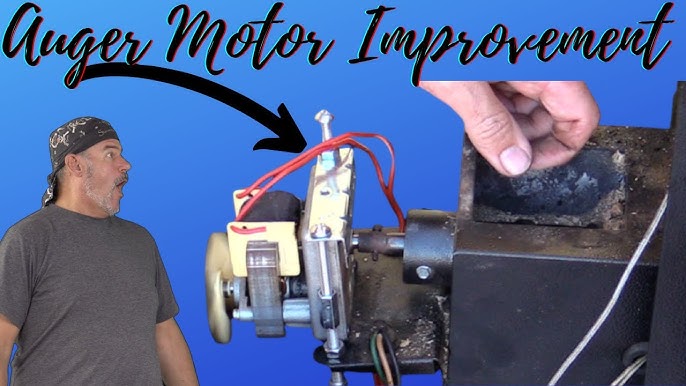
Remove rear access panels using 9/16″ sockets—these are typically held by 4-6 bolts. On most Pit Boss models (like the Austin or Grizzly series), the auger motor sits directly behind the hopper, connected to the auger tube via a coupler. Label all wire connections with tape before disconnecting the motor leads; reversing them during reassembly causes reverse rotation. Locate the shear pin: it runs horizontally through the coupler where the motor shaft meets the auger tube. If intact, the jam is inside the tube—not at the motor connection.
Clear Basic Pellet Clogs Without Full Disassembly
For minor jams, try this quick fix: Insert a 3-foot flexible auger cleaning brush (available at hardware stores) through the hopper opening into the auger tube. Rotate the brush clockwise while applying gentle downward pressure to break up compacted pellets. If you feel resistance, stop immediately—forcing it can bend the auger flighting. Alternatively, use a wooden dowel to push debris toward the fire pot end, then vacuum out fragments. Never use metal rods; they scratch the tube interior, creating future snag points for pellets.
Break Severe Jams with Advanced Techniques

When basic methods fail, escalate carefully. First, apply penetrating oil where the auger shaft enters the tube, letting it soak for 15 minutes to loosen tar-like residue. If the shaft remains frozen, clamp a large pipe wrench onto the exposed auger end (never the motor shaft) and apply steady counter-clockwise pressure. Critical tip: Always brace the auger tube with your free hand to prevent twisting damage to mounting brackets. For concrete-hard clogs, use a propane torch to heat the jam zone for 10-15 seconds—just enough to soften the pellet mass. Immediately follow with tapping using a hammer and punch on the shear pin area to dislodge fragments. Work in 30-second intervals with cooling breaks to avoid warping metal.
Reassemble and Test Your Pit Boss Auger System
Reinstall Components Correctly
Before reassembly, clean the auger tube interior with a wire brush attached to a drill, removing all pellet residue. Apply food-safe graphite lubricant sparingly to the auger flighting—never use oil or grease, which attracts sawdust. Slide the auger tube back into position, ensuring the front end aligns with the fire pot opening. Reconnect the motor using a new shear pin (Pit Boss part #7351900) if the original broke; hammer it gently through both shafts until flush. Misaligned pins cause premature snapping.
Verify Operation Before Full Reassembly
Test functionality in stages: First, reconnect motor wires and briefly power the motor without the auger tube installed. It should spin freely for 5 seconds. Next, reinstall the tube but leave rear panels off. Run a 2-minute “Prime” cycle with 1 cup of fresh pellets in the hopper. Watch for smooth pellet flow into the fire pot—stuttering indicates residual debris. Only after confirming free rotation and feeding should you reinstall baffles and panels.
Prevent Future Pit Boss Auger Jams for Trouble-Free Grilling
Store Pellets Like a Pit Boss Pro
Moisture is public enemy #1 for auger jams. Never store pellets in your hopper—transfer unused bags to airtight 5-gallon buckets with gasket lids. Keep them in a climate-controlled space, not garages or sheds where humidity fluctuates. When buying pellets, choose premium hardwood blends with under 1% fines (dust); cheap “discount” pellets accelerate clogs. Before each cook, inspect pellets for clumping—discard any that feel damp or stick together.
Implement a 5-Minute Maintenance Routine
After every 3-4 cooks, spend 5 minutes vacuuming the hopper base and fire pot area. For deeper protection, run your Pit Boss empty after cooking: Once food is done, set the grill to “Smoke” mode with the hopper empty until pellets stop feeding (usually 10-15 minutes). This clears residual pellets that could swell overnight. Every 40 lbs of pellets burned, remove the auger tube for a thorough brushing—this takes 10 minutes but prevents 90% of jams.
Critical Seasonal Shutdown Protocol
If storing your Pit Boss for over 30 days, completely disassemble the auger system. Remove the tube, soak it in vinegar for 30 minutes to dissolve resin buildup, then dry thoroughly. Store the auger tube indoors in a dry container—not attached to the grill. This single step prevents 95% of seasonal startup failures according to Pit Boss technicians.
Clearing a jammed auger isn’t complicated—it’s about methodical diagnosis and targeted clearing. By mastering these steps, you’ll avoid $150 service calls and keep your Pit Boss running like new for years. Remember: Always unplug before servicing, prioritize moisture control, and never force components. For persistent motor issues or electrical faults, contact Pit Boss support—but 8 out of 10 “broken” grills simply need this auger reset. Now fire it up and get back to what matters: perfecting your smoked brisket.