
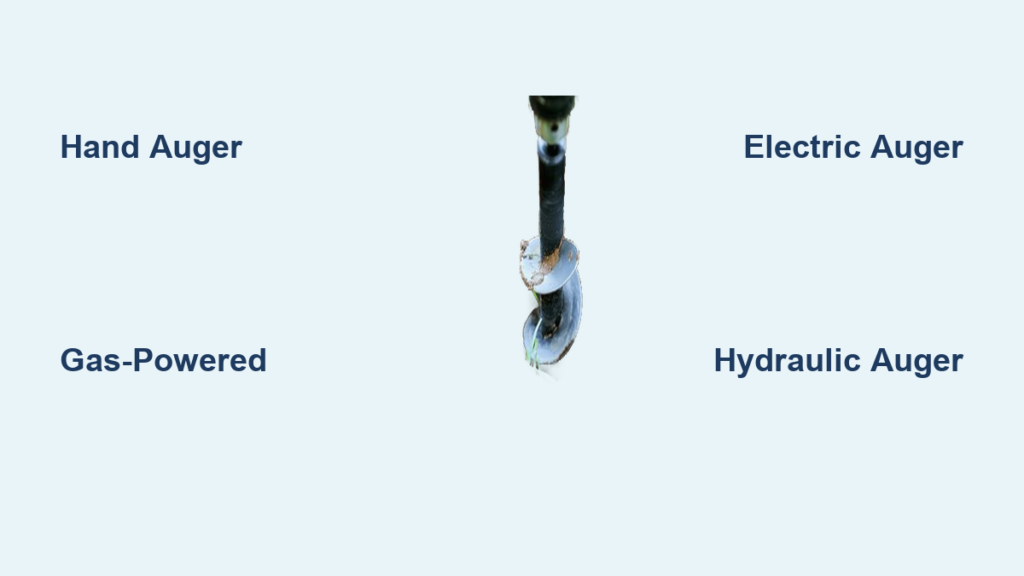
When your fence posts won’t stay upright or your ice fishing expedition turns into a workout, you quickly realize how crucial the right auger makes your project. As a machine designer with over a decade of experience in heavy equipment, I’ve seen how understanding the different types of auger can transform frustrating projects into smooth operations. Whether you’re drilling foundation holes, moving grain, or cutting through ice, selecting the proper auger type affects your efficiency, safety, and final results. This guide breaks down the specific auger varieties available today, their specialized applications, and exactly how to match the right tool to your project—saving you time, money, and physical strain.
Why Your Auger Choice Determines Project Success
Augers operate on a simple yet brilliant principle: a rotating helical blade moves material along a central shaft. This screw conveyor mechanism has evolved from ancient Egyptian designs to today’s specialized industrial tools. The wrong auger selection leads to wasted effort—like trying to dig fence post holes with a gardening auger or moving grain with a post hole digger. Each auger type features specific flight pitch, diameter, and power requirements engineered for particular materials and tasks. Understanding these differences prevents equipment damage, reduces user fatigue, and ensures clean, precise results whether you’re working with soil, ice, concrete, or grain.
Hand Augers: When Power Isn’t Necessary
Hand-operated augers deliver precision for small-scale projects where portability and control matter most. These tools excel when electrical outlets are unavailable or noise restrictions apply.
How Post Hole Augers Handle Fencing Projects Perfectly
For fence installations requiring 4-6 inch diameter holes, manual post hole augers feature T-handles that twist the spiral blade into soft to medium soils. Their compact design fits through narrow gates and works in tight spaces where power equipment can’t maneuver. Look for carbon steel construction with replaceable cutting blades—when the edge dulls after 50-100 holes, simply swap the tip rather than replacing the entire unit. Pro contractors use a rocking motion when hitting resistance, alternating clockwise and counter-clockwise turns to prevent binding.
Ice Augers That Cut Through 24+ Inches of Frozen Lake
Serious ice anglers rely on specialized hand augers with hardened steel blades that maintain sharpness in subzero conditions. The most efficient models feature a dual-blade system where the primary cutter creates the hole while secondary blades clear ice chips upward. A 7-inch diameter hand auger typically cuts through 24 inches of ice in under 90 seconds with proper technique—apply steady downward pressure while maintaining consistent rotation speed. Models with corrosion-resistant coatings prevent rust when stored with moisture from melting ice.
Soil Sampling Augers for Precision Agriculture
Narrow 1-3 inch diameter soil augers feature quick-release mechanisms that capture undisturbed core samples at specific depths. Agricultural professionals use these to analyze soil composition across fields, with extensions allowing sampling up to 48 inches deep. The key is maintaining vertical alignment—any tilt distorts the sample. After each use, remove all soil residue before storage to prevent corrosion and ensure accurate future samples.
Power Augers: Solving Big Jobs Efficiently
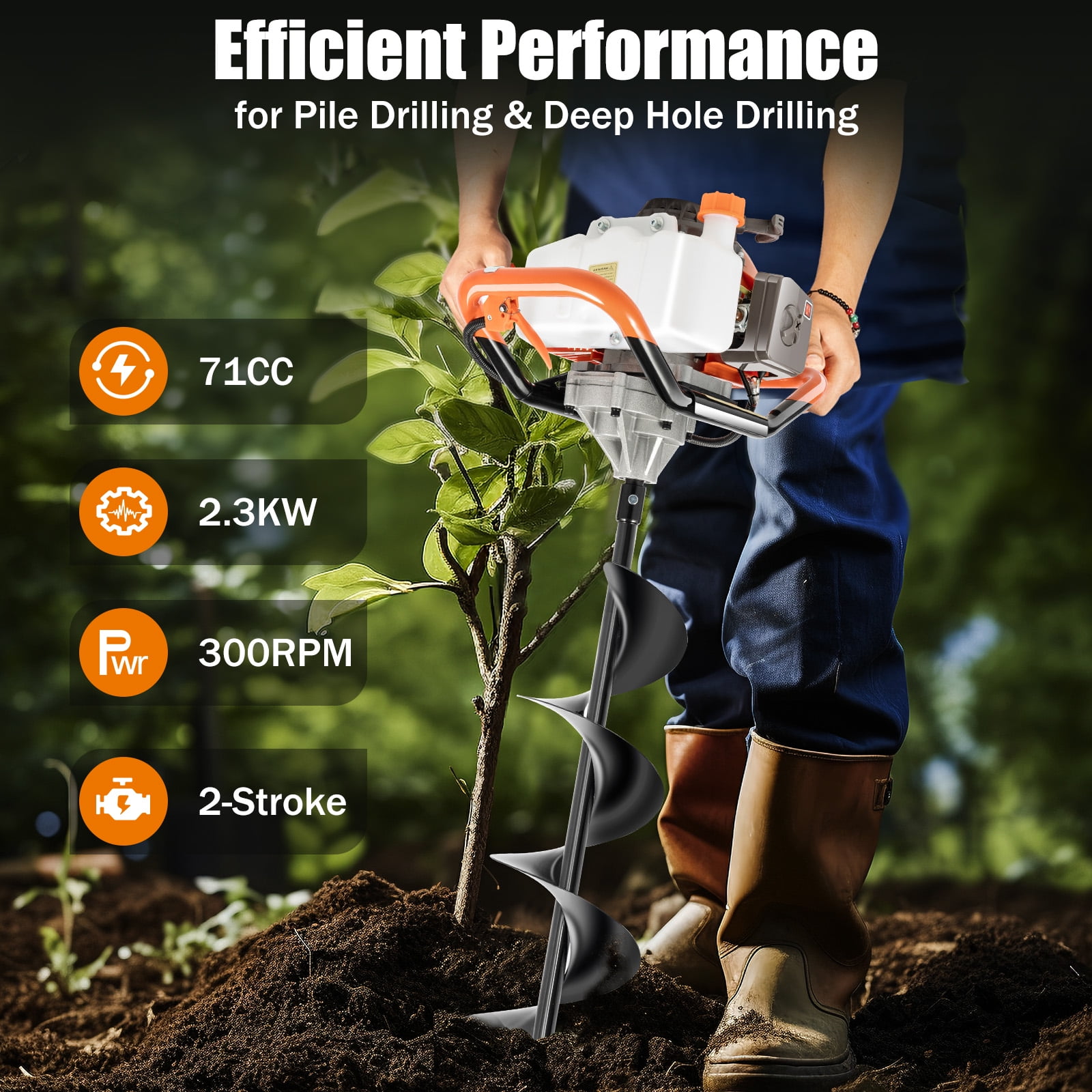
Power augers eliminate the physical strain of manual operation while dramatically increasing productivity for repetitive or large-scale projects.
Gas-Powered Augers That Handle Heavy Clay and Rocky Soil
When drilling through dense clay or encountering small rocks, 2-stroke gas augers deliver the torque needed to complete the job. A 52cc engine powers 6-12 inch diameter bits through 48-inch deep holes in under 30 seconds per hole. Contractors working on deck installations typically use two-person models with depth gauges that maintain consistent hole depth across multiple posts. Remember to use fresh 50:1 fuel mixture and replace air filters monthly when working in dusty conditions—these simple steps prevent 80% of common gas auger failures.
Electric Augers That Quietly Transform Backyard Projects
Cordless electric augers have revolutionized residential projects with their quiet operation and zero emissions. An 80V model with a 7-inch bit drills perfect 36-inch deep post holes in standard soil while producing less noise than a conversation. The real advantage comes during extended use—while gas models require carburetor adjustments in changing temperatures, electric augers maintain consistent performance from first to last hole. For properties with multiple projects, choose models with universal battery compatibility across your outdoor power equipment ecosystem.
Hydraulic Augers That Drill Foundation Piers with Precision
On commercial sites, hydraulic augers mounted to excavators drill 18-36 inch diameter holes up to 20 feet deep for structural piers. The hydraulic system provides variable speed control—slower rotation for dense soil, faster for loose material—while maintaining maximum torque. Operators watch the hydraulic pressure gauge; sudden spikes indicate obstruction while drops signal voids or unexpected soil changes. Proper maintenance means checking hydraulic fluid levels before each use and replacing seals annually to prevent costly leaks.
Earth Augers: Specialized Tools for Specific Soils
Different soil conditions demand specialized earth auger designs that maximize efficiency while minimizing wear.
Pier Hole Diggers That Create Perfect Foundation Footings
For deck and structural foundations, pier hole augers feature wider flighting that lifts soil efficiently while maintaining straight walls. The critical detail is the pitch angle—35-40 degrees works best for standard soil, while 25 degrees handles loose, sandy conditions without collapsing the hole. Contractors use auger extensions that lock securely with positive engagement pins, preventing separation during operation. When hitting hardpan, reverse rotation briefly to break up compacted layers before continuing downward.
Continuous Flight Augers That Drill Skyscraper Foundations
On major construction sites, truck-mounted continuous flight augers (CFA) drill 3-6 foot diameter holes up to 100 feet deep for building caissons. These systems simultaneously drill and pump concrete through the hollow stem, creating reinforced foundation columns in a single operation. The flight pitch and diameter change based on soil analysis—tighter pitch for cohesive soils, wider for granular materials. Operators monitor torque readings closely; deviations of more than 15% from baseline indicate changing soil conditions requiring adjustment.
Agricultural and Industrial Auger Systems
:max_bytes(150000):strip_icc()/AGIWestfieldSTX3DieselAuger-2a80a9de89cc465e898561f22a641574.jpg)
Beyond earth drilling, augers serve critical material handling functions across farming and manufacturing.
Grain Handling Augers That Move 5,000+ Bushels Per Hour
Commercial grain facilities use enclosed augers up to 200 feet long with 12-16 inch diameters to transfer grain between storage and transport. The flighting design varies based on material—steeper pitch for free-flowing corn, shallower for sticky soybeans. Critical maintenance points include checking bearing alignment weekly and replacing worn flighting edges before they damage the tube housing. During harvest season, running augers empty for 5 minutes after grain flow stops prevents material buildup that causes starting strain.
How to Select the Perfect Auger for Your Specific Project
Choosing correctly prevents wasted money and project delays. Follow this decision framework:
-
Material Analysis First: Test your soil or material—sandy soil needs different flighting than clay, while ice requires hardened steel blades. Bring a sample to rental centers for expert advice.
-
Calculate Exact Hole Requirements: Measure needed diameter and depth—then add 10% margin. A 6-inch post requires a 7-inch hole, but using an 8-inch auger creates excess work filling the gap.
-
Power Source Reality Check: For 5-10 holes, cordless electric suffices. For 50+ holes or rocky soil, gas power becomes cost-effective despite maintenance needs. Rent hydraulic attachments for commercial-scale work.
-
Attachment Compatibility: If you already own a power source (like a tractor PTO), select augers designed for that system rather than buying standalone units.
Critical Safety Steps Before Every Auger Operation
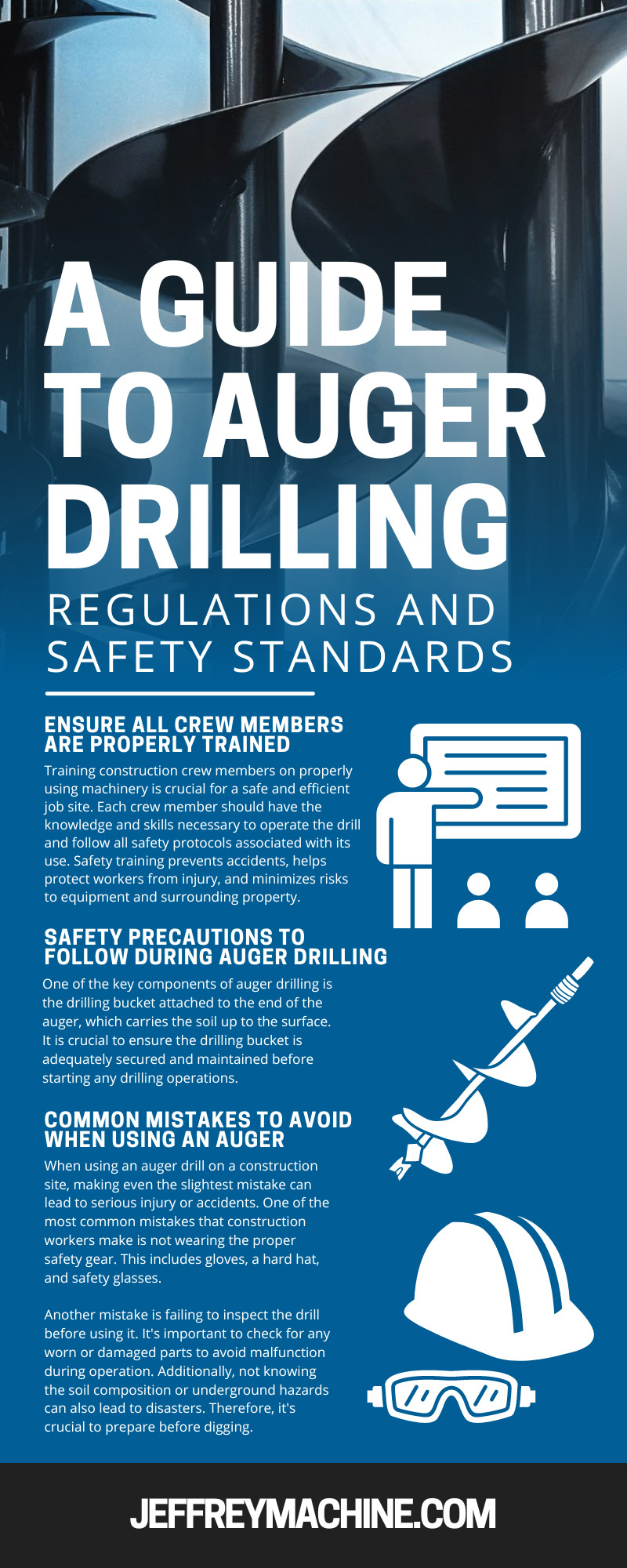
Augers generate tremendous torque that can cause severe injury when binding occurs. Before starting:
- Call 811 at least 72 hours before digging—underground utility strikes cause hundreds of injuries yearly
- Wear cut-resistant gloves and safety glasses—flying debris causes most minor injuries
- Maintain balanced two-point stance with feet shoulder-width apart to control kickback
- Keep bystanders 15+ feet away—especially children attracted to the rotating equipment
For gas and hydraulic models, always disconnect power before clearing jams. Never reach into the auger flighting—use a broom handle to dislodge material from a safe distance.
Proven Maintenance Practices That Double Auger Lifespan
Extend your auger’s service life with these field-tested practices:
- After each use, remove all soil residue with a stiff brush—trapped moisture causes rust
- Sharpen cutting edges when they develop burrs (not before) using a 10-inch mill file
- For gas models, drain fuel after 30 days or use stabilizer to prevent carburetor clogs
- Lubricate all connection points monthly with marine-grade grease to prevent seizing
Professionals track usage hours and replace flighting edges at 200 hours—waiting until they’re completely worn damages the central shaft.
Selecting from the different types of auger shouldn’t feel overwhelming. Match your soil conditions, hole specifications, and project scale to the right tool, and you’ll complete jobs faster with less physical strain. For most homeowners tackling fence or deck projects, a quality 40V-80V cordless auger with 6-8 inch bits handles 95% of residential needs. Contractors working on multiple jobs daily benefit from gas-powered versatility, while agricultural operations require specialized grain-handling systems. Remember to prioritize safety with every use—proper auger selection prevents dangerous kickback situations. When in doubt, rent before you buy to test different models on your specific soil conditions. The right auger transforms difficult digging into efficient, almost effortless work.