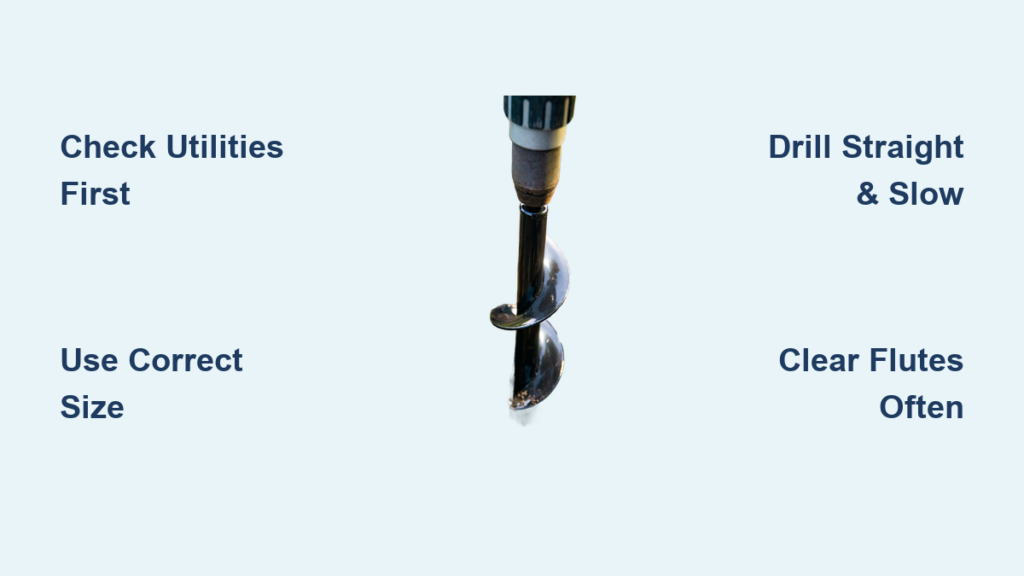
Your fence posts wobble, saplings struggle in shallow holes, and manual digging leaves you exhausted before lunch. If you’ve ever wasted hours digging uneven holes with a shovel, you know why learning how to use a garden auger transforms outdoor projects from grueling chores to efficient victories. This powerful tool—whether attached to your cordless drill or as a standalone machine—cuts through soil 70% faster than traditional methods, creating clean, uniform holes for planting, fencing, or deck installations. In this guide, you’ll master professional drilling techniques that prevent stuck augers, avoid drill damage, and handle rocky terrain—all while saving your back. Forget guesswork: we’ll cover exact pressure points, safety checks, and troubleshooting tricks you won’t find in manuals.
Most beginners make critical errors within the first 60 seconds: skipping utility checks, forcing the auger, or using improper gear. These mistakes lead to snapped drill bits, dangerous kickbacks, or hitting buried cables. But with the right preparation—like verifying underground lines 72 hours beforehand and selecting the correct auger diameter—you’ll drill flawless holes on your first attempt. Whether you’re planting 50 saplings or setting fence posts, this guide delivers actionable steps to conquer hard soil, clear obstructions, and finish projects before sunset. Let’s transform your garden auger from a frustrating tool into your most reliable outdoor ally.
Attach and Operate Your Garden Auger Like a Pro
Verify Underground Utilities and Gear Up Safely
Before touching your drill, contact 811 (Call Before You Dig) to mark underground utilities—this free service prevents life-threatening cable strikes and costly repairs. Once cleared, gear up: slip into steel-toed boots to protect against kickback,戴上 ANSI-rated safety glasses to block flying debris, and pull on grippy work gloves to maintain control. Clear rocks and roots from your drilling zone, then mark hole centers with spray paint. Skipping these steps risks electrocution or losing control of the auger at 500+ RPM. Always inspect your drill for frayed cords or battery damage first—never operate with wet hands or in rain.
Choose the Right Auger Size for Your Project
Grab an auger attachment matching your drill’s chuck size (most use 3/8″ or 1/2″ hex adapters) and select diameter based on your task:
– 1.5–3″ augers for planting bulbs or small shrubs
– 4–6″ augers for fence posts and tree saplings
– 7″+ augers for large structural supports (requires dedicated power auger)
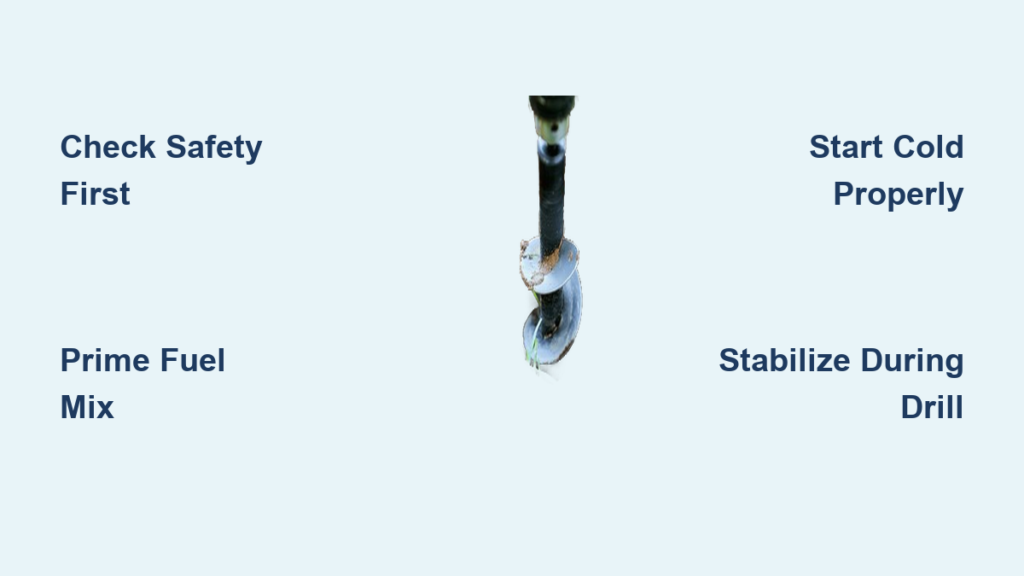
For soil types, use narrow-fluted augers in loose dirt and wide-fluted models for clay or packed earth. Never force oversized bits into underpowered drills—this strains motors and causes binding. If drilling deeper than 24″, add extension rods incrementally to maintain control.
Secure Your Drill and Auger Attachment Correctly
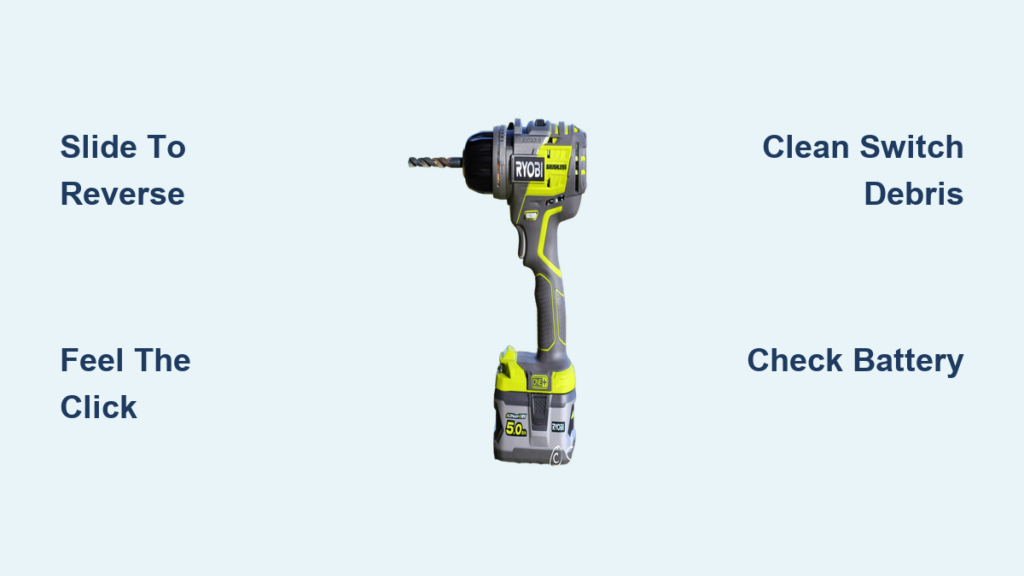
Lock the auger bit into your drill’s chuck using the key, then tighten until it resists twisting when pulled. Set the drill to low speed (400–600 RPM) and standard forward rotation—reverse mode can eject the auger violently. Attach a side handle for leverage, and ensure batteries are fully charged (low power causes stalling). Test the setup on scrap wood first: hold the drill at waist height, squeeze the trigger gently, and confirm the auger spins smoothly without wobble. If it vibrates excessively, recheck the chuck tightness—loose bits strip threads and damage drills.
Drill Straight Holes with Zero Kickback

Position yourself with feet shoulder-width apart, gripping the drill handle with your dominant hand and the side grip with your other. Place the auger tip precisely on your mark, then tilt the drill exactly 90 degrees to the ground—any angle creates crooked holes. Start at half-trigger pressure, letting the auger’s cutting edge bite naturally. Apply steady downward pressure (like pushing a shopping cart), but never force it; if resistance spikes, pause and lift 2–3 inches to clear soil from the flutes. In hard soil, rotate the drill clockwise while lifting to break compaction. For depths over 18″, drill in 6-inch increments, clearing debris after each pass.
Extract Clean Holes Without Soil Collapse
As you near target depth, reduce pressure and pull the auger up slowly in a corkscrew motion—yanking straight up collapses hole walls. When the auger clears the surface, shut off the drill immediately and tap the flutes against a bucket to dislodge packed soil. Inspect the hole: if sides are crumbling, tamp soil with a stick before planting. For fence posts, leave 2″ of loose soil at the bottom to prevent heaving in frost. Never leave augers spinning unattended—they can “run away” and damage motors.
Fix Stuck Augers and Rocky Soil in 60 Seconds
Why Your Auger Won’t Penetrate Hard Ground
Rocky or clay-heavy soil causes 80% of drilling failures. Instead of forcing the auger, reverse to slow reverse mode for 3 seconds to loosen debris, then lift completely to remove obstructions by hand. For stubborn roots, use a digging bar to sever them before retrying. In extreme clay, pour 1 cup of water into the hole first—this lubricates the soil without creating mud suction. Always maintain consistent downward pressure; hesitating lets soil recompact around the bit.
How to Free a Jammed Auger Without Damaging Your Drill
If the auger seizes mid-drill, never yank the trigger harder—this burns drill motors. Immediately switch to reverse and gently back out 2–3 inches while twisting the drill clockwise. If stuck solid, brace the auger shaft with a pipe wrench and rotate the drill handle counterclockwise. For severe jams, disconnect the auger and clear flutes with a pry bar. Pro tip: Apply silicone spray to the auger shaft before drilling to reduce soil adhesion in sticky conditions.
Prevent Drill Motor Burnout in 3 Critical Steps

Your drill dies prematurely when:
1. Spinning idle—always engage the auger with soil before triggering
2. Overheating—pause every 2 minutes for 30 seconds in dense soil
3. Using high torque—set drills to “drill” mode (not “hammer”) to avoid stripping gears
Never exceed 50% trigger pressure; if the drill strains, lift and clear flutes. Cordless drills need 20V+ batteries for augers—lower voltages stall in tough dirt. If smoke appears, stop immediately and let the motor cool for 15 minutes.
Drill Through Rocks Without Breaking Bits
When you hit stone, stop drilling instantly. Use a mattock to expose the rock, then chip it with a cold chisel. For small stones, angle the auger slightly and drill around the obstruction. Never hammer the auger shaft—that bends the bit. In rocky terrain, switch to a carbide-tipped auger (standard steel shatters on impact). If rocks persist, relocate the hole 6 inches over—don’t risk destroying your equipment.
Maintain Your Auger for Flawless Drilling All Season
Clean soil from auger flutes after every use with a stiff brush—dried mud causes rust and imbalance. Wipe the shaft with a silicone cloth to prevent corrosion, and store bits in a dry toolbox (never leave outside). Before each project, check for bent flutes or stripped chuck adapters; damaged parts create dangerous vibrations. Lubricate extension rod threads with lithium grease to avoid seizing. For seasonal storage, coat metal surfaces with mineral oil and remove batteries from cordless drills.
When planting trees, drill holes twice as wide as the root ball but no deeper—this prevents “planting shock” from settling soil. For fence posts, backfill with 3″ of gravel at the base before adding dirt to improve drainage. Always drill test holes in multiple yard spots first; soil density varies wildly even within 10 feet. And remember: if utility lines weren’t marked, stop drilling immediately—no project is worth risking a gas line strike.
Mastering how to use a garden auger turns exhausting all-day projects into lunch-break tasks. By following these precise steps—from verifying underground lines to extracting cleanly—you’ll avoid the top 5 mistakes that ruin drills and waste weekends. Now that you know how to handle rocky soil, prevent jams, and maintain your gear, you’re equipped to tackle any planting or fencing job with confidence. Grab your drill, attach that auger, and drill your first perfect hole before the sun sets. For more precision techniques, explore our guide on choosing the right auger size for tree planting—your next project starts with the right hole.