Your bathroom sink gurgles ominously as another inch of standing water creeps toward the countertop. You’ve plunged until your arms ache, and chemical drain cleaners only made the smell worse. This is where a drain auger becomes your secret weapon against plumbing nightmares. Knowing how to use a drain auger properly transforms you from a frustrated homeowner into a clog-busting hero. Forget expensive plumber calls for 90% of household blockages—this guide delivers the exact techniques professionals use to clear hair, grease, and debris from sinks, showers, and tubs. You’ll learn why cranking direction matters more than brute force, how to avoid kinking your cable in the first 30 seconds, and when to stop before causing costly damage.
Critical Safety Steps Before Snaking Your Clogged Sink
Before touching a single tool, protect yourself from hidden hazards lurking in stagnant drain water. Bacteria from organic clogs can cause skin infections, while sharp pipe edges threaten serious cuts. Grab heavy-duty rubber gloves that cover your wrists and ANSI-approved safety goggles—never skip these even for “quick” jobs. Clear everything from under the sink cabinet and spread old towels on the floor to catch spills. Place a 5-gallon bucket beneath the P-trap (the U-shaped pipe under sinks) to capture the 1-2 cups of standing water inside. For showers or tubs, remove the strainer cover first using needle-nose pliers if it’s stuck. If your sink has a pop-up stopper, unscrew the pivot rod underneath to free the stopper mechanism. This prep work prevents 80% of DIY plumbing disasters before you even insert the auger.
Choosing Your Drain Auger: Sink vs. Toilet vs. Main Line

Using the wrong auger risks scratching porcelain or snapping cables inside pipes. Match your tool to the clog location with these specific guidelines:
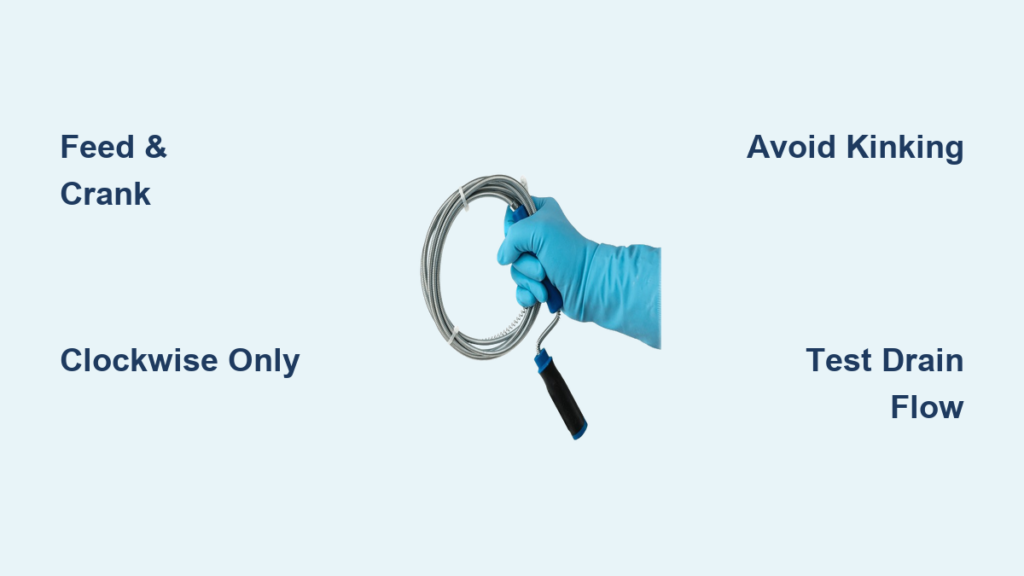
- Sink/Shower/Tub Clogs (Hand-Crank Augers): Grab a 15-25 foot manual auger with a ¼-inch diameter cable. These feature a plastic or rubber guard around the crank to protect sink finishes. Avoid cheap “all-in-one” kits—their flimsy cables kink instantly in PVC pipes.
- Toilet Clogs (Closet Augers Only): Never use a sink auger here! Toilet-specific augers have a rigid 3-6 foot shaft with a protective rubber boot that hugs the bowl’s contours. The boot prevents porcelain scratches while the short cable navigates the S-trap.
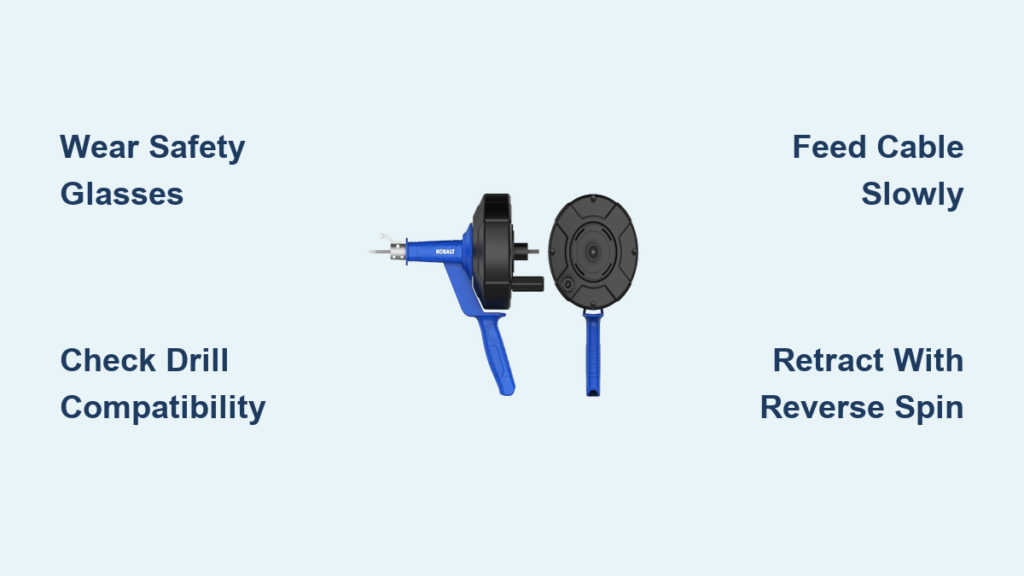
- Main Line Clogs (Drum Augers): If multiple fixtures back up simultaneously, you need a 50+ foot drum auger. These motorized units feed cable through a spring-loaded drum—rent one from hardware stores for $40/day.
Feeding the Auger Through the P-Trap Without Kinking
Removing the P-trap gives you direct access to the drain line, eliminating 90% of cable-feeding headaches. Place your bucket under the slip nuts, then loosen them with channel-lock pliers (counter-clockwise). Slide the P-trap out carefully—expect water to gush into your bucket. Now insert the auger cable directly into the drainpipe stub. Hold the auger housing firmly against the pipe opening with your non-dominant hand. With your dominant hand, extend 6 inches of cable by pressing the release button. Crucial visual cue: If the cable bends sideways instead of going straight in, you’re fighting pipe curvature. Rotate the auger housing until the cable feeds smoothly downward—this alignment prevents instant kinking.
Why Cranking While Feeding Breaks Through Stubborn Clogs
This is where most DIYers fail: they shove the cable without cranking, jamming it against pipe bends. Here’s the professional sequence:
- Feed + Crank Simultaneously: Push the cable 2 inches forward while turning the handle clockwise with steady pressure. The rotation drills through clogs like a corkscrew.
- Feel for Resistance: When you hit the blockage (usually 15-25 feet in sinks), the crank will stiffen. Don’t stop cranking—this is your signal the auger is engaged.
- Twist-and-Push Technique: Apply gentle forward pressure while cranking. If it sticks, reverse direction ¼ turn counterclockwise to dislodge, then resume clockwise cranking.
Pro Tip: For hair clogs, you’ll feel the cable “grab” strands. Keep cranking slowly—it’s wrapping hair around the tip. For grease clogs, use short clockwise jabs like a drill.
Breaking Up Hair Clogs: When to Push and When to Twist

Hair and soap scum create springy blockages that resist plunging. As you crank through resistance:
- If the cable slides deeper: You’ve punched through—keep feeding 12 more inches to clear the immediate pipe.
- If resistance remains: Stop pushing. Crank continuously while gently pulling back 2 inches. This hooks hair onto the auger tip.
- The “aha” moment: Sudden slack means you’ve either cleared the clog or hooked debris. Crank while slowly retracting—if tension increases, you’re pulling the clog toward the drain opening.
Never force it: Aggressive pushing when stuck creates cable knots that require professional extraction. If you can’t advance after 30 seconds of proper cranking, retract and reassess.
Withdrawing the Cable Without Knotting: The Clockwise Rule
Retrieving the cable incorrectly causes more damage than the clog itself. This rule is non-negotiable: While pulling the cable out, keep cranking clockwise at the same speed you used while inserting. Why? The cable’s natural twist tightens during insertion—if you stop cranking while retracting, it untwists violently and knots inside your pipe.
Hold the auger housing firmly against the drain opening. With your other hand:
1. Crank clockwise while pulling steady tension
2. Let the cable coil back into its drum naturally—don’t yank
3. Wipe debris off with gloved hands as it emerges (have trash bags ready)
Visual warning: If the cable starts whipping or coiling on the floor, you’ve stopped cranking too soon. Immediately resume clockwise rotation while holding tension.
Testing Drain Flow After Clearing the Clog
Don’t assume success until you verify full drainage. First, reassemble the P-trap if removed—hand-tighten slip nuts only (overtightening cracks PVC). Then:
- Pour 4 cups of hot (not boiling) water slowly down the drain
- Watch for gurgling or slow drainage—indicates residual debris
- If water pools, repeat the auger process for 10 more seconds
- Final test: Fill the sink completely and pull the stopper
Critical check: Run water for 2 full minutes. If it drains without gurgling, you’ve cleared the clog. Persistent slow drainage means debris remains deeper—retract and re-snake.
5 Costly Drain Auger Mistakes That Damage Pipes
Mistake: Forcing the Cable Through Resistance
Pushing without cranking buckles the cable against pipe bends, creating permanent kinks. Fix: Crank continuously while applying feather-light pressure. If stuck, retract and restart.
Mistake: Using Counterclockwise Cranking on Insertion
Reversing direction during insertion unwinds the cable’s natural twist, causing slack and tangles. Fix: Clockwise only while feeding forward.
Mistake: Snaking Cast Iron Pipes Aggressively
Old, brittle pipes shatter under forceful cranking. Fix: Use feather-light pressure and pause every 5 feet to assess resistance.
Mistake: Leaving Debris in the Pipe After Retrieval
Pulling out without clearing hair/grease just moves the clog deeper. Fix: Crank while retracting to scrape pipe walls.
Mistake: Using a Sink Auger on Toilets
The flexible cable scratches porcelain, causing leaks. Fix: Always use a closet auger’s protective boot for toilets.
Signs Your Clog Needs a Professional Plumber (Not a DIY Snake)
Stop immediately if you notice these red flags:
- Multiple fixtures backing up simultaneously: Indicates a main sewer line clog beyond 50 feet—requires drum auger expertise.
- Sewage smell without visible clog: Suggests a broken pipe or vent issue requiring camera inspection.
- Auger won’t advance past 10 feet in sinks: Likely hitting a collapsed pipe or root intrusion.
- Water pooling under slab floors: Signals underground pipe damage needing hydro-jetting.
When to call pros: If you’ve attempted proper snaking twice without success, or if pipes are pre-1980 galvanized steel. Professionals use locator transmitters to avoid pipe damage and have camera systems to diagnose hidden issues.
Mastering how to use a drain auger saves hundreds per clog while giving you control over household emergencies. Remember the golden rule: crank clockwise while feeding and retracting—this single technique prevents 95% of DIY disasters. For sink and shower clogs, 85% clear within 15 minutes using the twist-and-feed method. Keep your auger in a dry toolbox with spare cables, and always test drains thoroughly after clearing. If you encounter main line issues or fragile pipes, respect your limits—calling a plumber before flooding occurs is never a wasted expense. With this knowledge, you’re equipped to conquer most clogs confidently, turning plumbing panic into proud problem-solving.