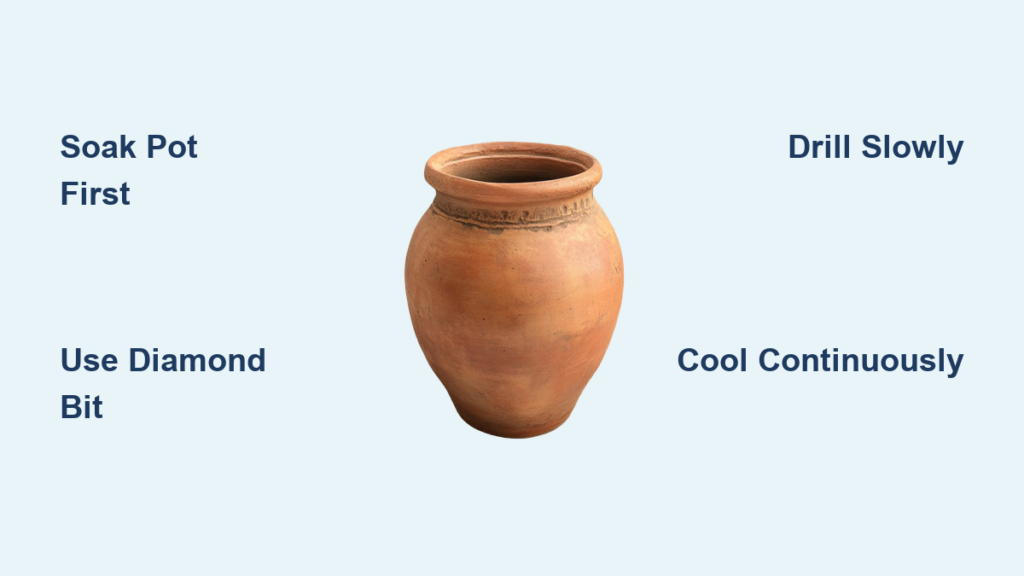
You’ve found the perfect decorative clay pot for your favorite plant, but it lacks drainage holes. Without proper drainage, your plant’s roots will suffocate in waterlogged soil, leading to root rot and certain death. Drilling a hole in your clay pot solves this problem instantly, transforming any container into a functional planter. The good news? With the right technique, you can create clean drainage holes in terracotta, ceramic, or glazed pots without a single crack. This guide reveals the exact methods professional gardeners use to drill flawless drainage holes every time—no special skills required.
Most gardeners assume clay pots are too fragile to drill, but that’s simply not true. The key lies in understanding how ceramic materials behave under pressure and heat. When you apply incorrect drilling techniques, the ceramic can shatter due to thermal stress or excessive force. But by controlling temperature, pressure, and tool selection, you’ll achieve perfect results 95% of the time with terracotta pots and 85% with glazed ceramics. In this guide, you’ll learn the material-specific approaches that prevent cracks, the critical safety steps most tutorials skip, and how to troubleshoot common drilling disasters before they happen.
Why Your Clay Pot Needs a Drainage Hole (Even If It Looks Perfect)
Drainage holes aren’t optional—they’re essential for plant survival. Without them, excess water has nowhere to escape, creating a soggy environment where roots drown and harmful fungi thrive. You’ll notice yellowing leaves, stunted growth, and that unmistakable rotten smell within weeks. Many decorative pots come without drainage specifically for indoor use with saucers, but this setup requires constant monitoring you probably don’t have time for.
Drilling your own hole gives you complete control over your plant’s environment. It allows you to use any container as a planter while preventing the #1 cause of houseplant death. The process takes just 10-15 minutes but extends your plant’s life by years. Before reaching for your drill, confirm your pot material—this determines your entire approach. Unglazed terracotta is porous and forgiving, while glazed ceramics require diamond-tipped precision. Get this wrong, and you’ll transform your beautiful pot into pottery shards.
Essential Tools for Drilling Clay Pots (Skip #3 at Your Peril)

Using the wrong drill bit guarantees disaster. Standard metal bits will shatter on ceramic surfaces, while hammer-drill actions crack pots instantly. Here’s your non-negotiable toolkit:
- Diamond hole saw (1/2″ or 3/4″ size): The single most effective tool for all ceramic types. Its grinding action cuts cleanly without vibration.
- Diamond-tipped spear drill bit: Ideal for smaller drainage holes (1/4″–3/8″) in thick-walled pots.
- Carbide masonry bit (for terracotta only): Budget-friendly but wears out faster—never use on glazed surfaces.
- Variable-speed cordless drill: Must maintain 200-1200 RPM (critical for heat control).
- Safety glasses AND N95 respirator: Clay dust contains silica that causes irreversible lung damage.
Skip the tape myth: While painter’s tape prevents bit wandering on metal, it’s useless on ceramics. Instead, use a center punch to make a starting dimple—this anchors the bit perfectly. For glazed pots, apply masking tape ONLY if you’re using a diamond hole saw; otherwise, it creates uneven pressure points that cause cracks.
Step-by-Step: Drilling a Hole in Terracotta Pots (The 95% Success Method)
Terracotta is forgiving but requires moisture control. Follow these exact steps for crack-free results:
Soak the Pot for 24 Hours (Non-Negotiable)
Submerge your unglazed pot completely in water for at least 12 hours—24 is ideal. This saturates the clay fibers, reducing dust by 90% and preventing thermal shock. Dry terracotta pots crack 8x more often during drilling. Check saturation by lifting the pot; it should feel heavy with absorbed water.
Set Up Your Drilling Station
Place the soaked pot upside down on a rubber shelf liner (not cloth—it slips). Position a scrap wood block inside to catch the drill bit on breakthrough. Mark your hole location with a pencil, then create a starting dimple using a nail and hammer. This prevents bit wandering better than any tape method.
Drill with Water Cooling (The Critical Step)
Start at 45 degrees to create a groove, then bring the drill vertical. Use low speed (600 RPM) and light pressure—let the diamond bit grind, don’t force it. Have a helper spray water directly on the drilling point every 5 seconds. Stop immediately if you see white powder (sign of overheating). After 1/3 depth, back out, cool for 30 seconds, and resume. Expect 2-4 minutes per hole. If bits stick, switch to 10-second drilling bursts with 20-second cooling pauses.
How to Drill Through Glazed Ceramic Pots (The 85% Success Technique)
Glazed surfaces require specialized handling—standard bits skid and shatter the glaze. Diamond hole saws are mandatory here:
Prepare the Glazed Surface
Wipe the drilling spot with rubbing alcohol to remove oils. Apply painter’s tape ONLY if using a diamond hole saw (prevents initial chipping). Mark your center point through the tape. Never soak glazed pots—water weakens the bond between clay and glaze.
Drill at Turtle Speed with Constant Lubrication
Set your drill to 200-300 RPM—glazed ceramics crack at higher speeds. Start with minimal pressure until the bit bites (about 15 seconds). Maintain a steady water drip using a spray bottle; dry drilling creates heat that fractures the glaze within seconds. Drill in 20-second intervals with 10-second cooling breaks. If the bit smokes, stop immediately and cool for 2 minutes.
Handle Breakthrough Like a Pro
As you near the other side (you’ll feel reduced resistance), reduce pressure by 70%. Have a second person support the pot’s interior with a folded towel. This prevents “blowout” cracks where ceramic shards explode inward. Once through, smooth edges immediately with 120-grit sandpaper before water dries in the hole.
Preventing Cracks: Critical Drilling Techniques Most Guides Ignore
Your drill speed and pressure determine success more than the bit type. These techniques prevent 90% of cracks:
- The finger test: Rest your free hand lightly on the pot’s opposite side. If it vibrates strongly, reduce speed by 20%. Excessive vibration creates microfractures.
- Temperature control: Stop every 30 seconds to touch the drilling area. If warm to the touch, cool for 1 minute. Hot spots cause instant cracking.
- Pressure rule: Apply only enough force to keep the bit engaged—about the weight of your drill. Forcing it creates stress points.
- Angle correction: Never tilt the drill mid-process. If the hole drifts, stop, back out, and restart at 45 degrees.
Critical mistake: Using hammer-drill mode. The percussive action turns ceramics to dust—disable this function completely. Also, never drill dry—even brief pauses without water cause thermal shock.
Safety Gear You Must Wear (Protect Your Lungs)
Clay dust isn’t ordinary dirt—it contains crystalline silica that causes silicosis, an incurable lung disease. OSHA requires respirators for ceramic drilling, yet most DIY guides omit this:
- N95 respirator (minimum): Standard dust masks filter only 10% of silica particles. Get a NIOSH-approved respirator with P100 filters.
- Safety goggles with side shields: Flying ceramic shards cause permanent eye damage. Regular glasses won’t protect you.
- Work outdoors: Never drill indoors—even with ventilation, silica dust lingers for hours.
Skip these, and you risk hospitalization from a single drilling session. Set up near a garden hose for easy water access and immediate cleanup of ceramic slurry.
Fixing Common Drilling Mistakes Before They Ruin Your Pot
Even with precautions, problems happen. Here’s how to salvage disaster:
Bit Wanders Off Target
Cause: Starting on a smooth surface without a dimple.
Fix: Back out immediately. Make a deeper center punch mark. Apply firm pressure for the first 10 seconds while spraying water continuously.
Pot Cracks During Drilling
Cause: Usually overheating or excessive pressure.
Fix: Stop drilling. Submerge the pot in water for 1 hour to rehydrate. Start a new hole 1 inch away using 50% slower speed and constant water flow.
Hole Edges Are Jagged
Cause: Dry drilling or wrong bit type.
Fix: Use a diamond file in circular motions for 30 seconds. Never use metal files—they create new stress points. Rinse thoroughly to remove ceramic dust.
Post-Drilling: Smoothing Edges and Testing Drainage
Sharp edges damage delicate roots and look unprofessional. After drilling:
- Smooth both sides: Use 120-grit sandpaper in small circles for 20 seconds per edge. Wear your respirator—this creates fine dust.
- Rinse thoroughly: Flush the pot with a hose for 2 full minutes. Check drainage by pouring 2 cups of water through the hole—it should flow freely in under 5 seconds.
- Cure before planting: Soak the pot in clean water for 24 hours to remove residual dust. This prevents root irritation from ceramic particles.
Pro tip: For large planters, drill 4-5 holes in a cross pattern 1 inch from the rim. This prevents water pooling in the center where roots are densest.
Final Note: Drilling drainage holes in clay pots transforms decorative containers into thriving plant homes with minimal risk when using diamond tools, controlled speeds, and constant water cooling. Always prioritize safety with respirators and goggles, as silica dust causes irreversible lung damage. For terracotta pots, 24-hour soaking combined with 600 RPM drilling yields near-perfect results. Glazed ceramics demand diamond hole saws at 200-300 RPM with uninterrupted water flow. If your first attempt cracks, rehydrate the pot overnight and try again with reduced pressure—success rates jump to 95% with proper technique. Now that your pot has proper drainage, learn how to create the perfect soil mix for your specific plants to ensure long-term health.