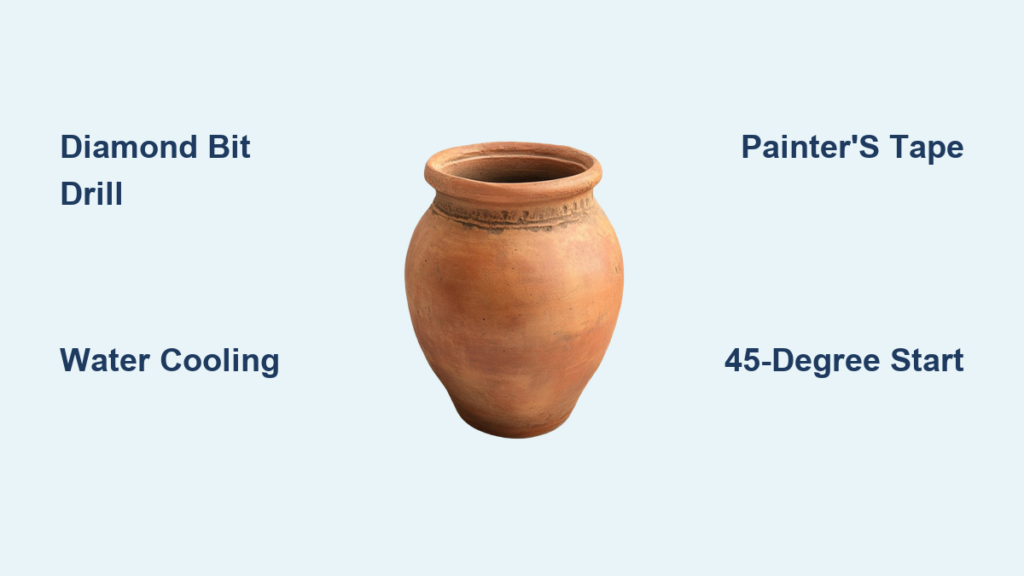
That gorgeous ceramic pot you bought is perfect for your succulent display—except for one critical flaw: no drainage hole. Without proper drainage, your plants will suffer from root rot within weeks, no matter how carefully you water. Drilling a clean hole in ceramic seems intimidating, but with the right technique, you can transform any decorative pot into a healthy home for your plants in under 20 minutes. This guide reveals exactly how to drill drainage holes in ceramic pots safely, avoiding the dreaded cracks that ruin so many DIY attempts.
Most plant enthusiasts face this dilemma: beautiful pots with no drainage versus functional but ugly nursery containers. The solution isn’t to sacrifice aesthetics for plant health. By following these proven techniques, you’ll gain the confidence to modify almost any ceramic container while keeping your plants thriving. You’ll learn the specific tools professionals use, the water-cooling trick that prevents thermal shock, and how to avoid the most common mistakes that lead to shattered pottery.
Essential Tools for Drilling Ceramic Pots Effectively

Why Diamond-Tipped Drill Bits Are Non-Negotiable
Standard drill bits will shatter ceramic instantly—don’t waste your time with them. Diamond-tipped or carbide-tipped masonry bits specifically designed for porcelain and ceramic are your only viable option. These specialized bits feature microscopic diamond particles embedded in the tip that grind through the hard, glazed surface without causing stress fractures. For most home projects, a ¼-inch diamond-tipped masonry bit costs under $15 and handles dozens of pots. If you’re drilling multiple pots regularly, invest in a diamond hole saw attachment for cleaner, faster results.
Safety Gear You Must Wear Before Starting
Skipping safety gear when drilling ceramic pots risks serious injury—this isn’t optional. Ceramic dust contains fine particles that can permanently damage your lungs, while flying shards can cause eye injuries. Before you touch your drill, gather:
- Safety glasses with side shields (regular glasses won’t cut it)
- N95 dust mask to prevent inhaling ceramic particles
- Work gloves to protect hands from sharp edges
- Ear protection if drilling for extended periods
Work outdoors whenever possible to avoid dust accumulation indoors. Set up your workstation away from children and pets, and keep a first-aid kit nearby for unexpected cuts.
Preparing Your Ceramic Pot for Successful Drilling
How to Position Your Pot to Prevent Blowout Damage
The most common drilling disaster—a clean hole on top but a shattered mess on the bottom—happens because of inadequate support. Place your pot upside down on a thick scrap wood block (at least ¾-inch thick). This wood backing absorbs the drill bit’s exit force, preventing “blowout” where ceramic explodes outward. For large pots, fill the interior with additional wood blocks or crumpled newspaper to support the inner wall during drilling. Clamp the pot securely to your work surface so it can’t spin or shift mid-drill—your hands shouldn’t be holding it while the drill operates.
The Painter’s Tape Trick That Stops Drill Bit Slippage
Glazed ceramic surfaces send drill bits skittering across the surface like a hockey puck. Apply a small square of blue painter’s tape exactly where you want your hole, then mark the center with a pencil. This creates traction for the bit to grip instead of sliding. For extra security on valuable pots, use a center punch or nail to make a shallow dimple through the tape—this gives the bit a perfect starting point. The tape also reduces chipping around the hole’s edge, giving you a cleaner final result.
Mastering the Drilling Technique for Ceramic Pots
Why Starting at a 45-Degree Angle Prevents Cracks
Begin drilling at a 45-degree angle to the pot’s surface, not straight on. This angled approach lets the bit “bite” into the ceramic gradually, creating a starter groove that prevents wandering. Apply gentle pressure and maintain this angle for the first 10-15 seconds until you’ve established a clear path. Then slowly straighten to 90 degrees while continuing to drill. Forcing the bit straight down at full pressure creates instant stress fractures in the brittle ceramic.
The Water Cooling Secret That Makes or Breaks Your Project
Continuous water cooling isn’t optional—it’s the difference between success and shattered pottery. Fill a spray bottle with water and maintain a steady stream on the drilling area throughout the process. The water serves three critical functions:
– Cools the drill bit to prevent overheating and glazing
– Lubricates the cutting surface to reduce friction
– Captures ceramic dust before it becomes airborne
If possible, drill inside a shallow tray of water or position your pot over a sink with a gentle flow. Without constant moisture, the heat buildup will crack your pot within seconds.
When to Increase Pressure (and When to Back Off)
Let the drill bit do the work—don’t force it. Apply light, consistent pressure equivalent to holding a pen while writing. If you hear squealing or see smoke, you’re pressing too hard. Stop immediately, add more water, and reduce pressure. When the bit begins to penetrate (about halfway through), ease off pressure slightly as it exits the backside to prevent blowout. If your drill struggles, lower the speed setting—ceramic requires slow, steady drilling (400-800 RPM) rather than high-speed force.
Troubleshooting Common Drilling Problems

What to Do When Your Drill Bit Keeps Slipping
Even with painter’s tape, bits sometimes wander on slick glazed surfaces. Stop immediately if the bit starts sliding—continuing will scratch your pot and create weak spots. Reposition your tape, make a deeper starter dimple with a center punch, and begin again at that crucial 45-degree angle. Some professionals use a rotary tool at low speed to create a starter divot before switching to the drill. If you’re using a dull bit, replace it—diamond tips lose effectiveness after multiple ceramic projects.
How to Fix a Hairline Crack During Drilling
If you notice a hairline crack forming, stop drilling immediately and assess the damage. Small cracks often stop progressing if you reduce pressure and increase water flow. For valuable pots, fill the crack with clear epoxy while it’s still wet, then continue drilling with extra caution. If the crack spreads significantly, abandon the hole and consider repurposing the pot as a cachepot (placing a nursery pot inside without drilling).
Finishing and Smoothing Your Drainage Hole
The 2-Minute Edge-Smoothing Technique
Raw ceramic edges can cut roots and your hands during repotting. Smooth the hole’s perimeter immediately after drilling while the ceramic is still damp. Use 120-grit sandpaper wrapped around a pencil or small dowel, working gently in circular motions for 60-90 seconds. Focus on the interior edge where roots will contact the hole. Rinse thoroughly afterward to remove all ceramic dust—this residue can harm plants if left in the pot. Test your work by running a finger around the edge; it should feel uniformly smooth with no sharp points.
Alternative Drainage Solutions When Drilling Fails
Creating Effective Drainage Without Holes
If your pot cracks during drilling or you’re working with a valuable antique, use the cachepot method for instant drainage. Keep your plant in its nursery pot (which already has drainage holes) and simply place it inside your decorative ceramic container. When watering, remove the inner pot, water thoroughly, let it drain completely, then return it to the decorative pot. Alternatively, create a false drainage layer with 2-3 inches of gravel or LECA (lightweight expanded clay aggregate) at the bottom, topped with landscape fabric to prevent soil contamination.
For pots you’ve already drilled but notice poor drainage, add multiple smaller holes around the base rather than one large one. Four ¼-inch holes spaced evenly provide better aeration than a single ½-inch hole. If roots start growing through the holes, place the pot on pot feet or small stones to create air circulation underneath—this prevents roots from sealing the drainage holes against solid surfaces.
With these techniques, you’ll never have to choose between beautiful ceramic pots and healthy plants again. Remember: diamond bits, constant water, and gentle pressure are your non-negotiables for success. Practice on a broken tile or spare pot first to build confidence before tackling your favorite container. When in doubt about valuable ceramics, consult a professional potter—many studios offer drilling services for a small fee. Your plants will reward you with vibrant growth knowing their roots aren’t sitting in waterlogged soil.