When your drill struggles to drive large lag bolts into pressure-treated lumber or stalls while boring through dense oak, you’re experiencing the frustrating limitations of insufficient torque. Understanding how to increase torque on drill operations can transform your tool from barely adequate to powerfully effective. Whether you’re building a deck, installing heavy-duty shelving, or tackling concrete projects, maximizing your drill’s rotational force means completing jobs faster with less strain on both you and your equipment. This guide reveals practical, safe techniques to boost your drill’s power output without compromising safety or reliability.
Why Your Drill Struggles with Heavy-Duty Applications
The Physics Behind Drill Torque Limitations
Torque represents the rotational force your drill generates to turn a bit or drive fasteners, measured in inch-pounds (in-lb) or Newton-meters (Nm). Entry-level drills typically deliver 300-500 in-lb—sufficient for assembling furniture but inadequate for demanding construction tasks. When your drill stalls while driving 3/4″ lag bolts into hardwood, you’ve hit its torque ceiling. Professional-grade models offering 800-1,200+ in-lb handle these challenges with ease, but you don’t necessarily need a new tool to gain more power.
Recognizing When You Need More Torque
Your drill signals torque insufficiency through specific symptoms: slowing dramatically during operation, emitting burning smells from overheating, or completely stalling when encountering resistance. High-torque applications like drilling 1″ holes in structural beams or driving large fasteners into pressure-treated lumber demand substantial rotational force. If your drill struggles with these tasks, implementing the right torque-boosting techniques becomes essential for productivity and tool longevity.
Immediate Fixes to Maximize Your Drill’s Existing Power
Optimize Gear Settings for Maximum Torque Output
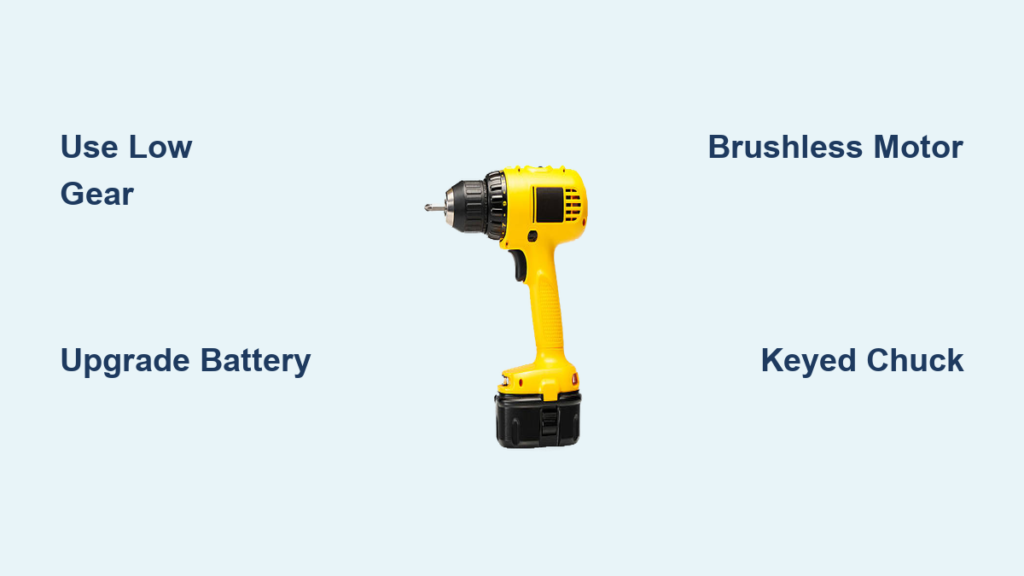
Most modern drills feature multiple speed settings that directly control torque delivery. For maximum power, always select the lowest gear setting (typically marked as “1” or with a turtle icon). This gear ratio prioritizes torque over speed, multiplying your motor’s rotational force while reducing RPM. When driving large fasteners or drilling through dense materials, this setting provides up to 30% more usable torque without any modifications. Listen for the distinct sound change when shifting gears—proper engagement creates a noticeable mechanical click.
Battery Upgrades That Deliver Real Power Gains

Your cordless drill’s battery directly impacts torque capability. Standard 2.0Ah batteries often can’t deliver sufficient current for sustained high-torque applications. Upgrade to 5.0Ah or higher capacity batteries, which provide both longer runtime and higher current delivery for power-hungry tasks. For significant torque increases, seek high-drain batteries featuring cells like Samsung 30Q or Sony VTC6 that offer continuous discharge rates of 20-30A. These specialized batteries maintain voltage under load, preventing the “voltage sag” that causes torque drop-off during demanding operations.
Proper Technique to Transfer Maximum Power
Your grip technique significantly affects torque delivery. When driving large fasteners or drilling substantial holes, brace the drill firmly against your hip or shoulder while applying forward pressure. This counteracts rotational forces and prevents the tool from twisting in your hands. Always engage the auxiliary handle when available—it provides crucial leverage control during high-torque applications. Position your body so you can push directly along the drill’s axis rather than at an angle, ensuring maximum power transfer to the workpiece.
Advanced Upgrades for Serious Power Increases
Switching to Brushless Motor Technology
When shopping for a new drill or considering significant upgrades, prioritize brushless motor technology. These advanced motors deliver up to 30% more torque than equivalent brushed models while generating less heat and consuming less battery power. The Milwaukee M18 Fuel series exemplifies this advantage, with professional models reaching 1,200 in-lb of torque through intelligent motor control. Brushless drills automatically adjust power delivery based on load, maintaining maximum torque even as battery charge depletes—something brushed motors cannot accomplish.
Keyed Chuck Upgrades for Better Bit Grip

Keyless chucks often slip under extreme torque, wasting power through bit slippage. Upgrade to a keyed chuck system for critical high-torque applications. Professional-grade Jacobs or Rohm chucks provide superior gripping force and runout accuracy, ensuring 100% power transfer from motor to bit. When tightening the chuck, use the included key to apply maximum pressure—properly secured bits won’t slip even during the most demanding operations. Inspect chuck jaws regularly for wear, as damaged jaws significantly reduce gripping power.
Safety-Critical Modifications to Avoid
Why Internal Gear Modifications Are Dangerous
While online forums discuss replacing stock plastic gears with steel alternatives for increased torque, this modification creates serious safety hazards. Mismatched gear ratios or improperly installed components can cause catastrophic failure during operation, sending metal shrapnel flying. The Milwaukee 2804-20, for example, features specifically engineered gear sets that balance torque, speed, and durability—altering this balance risks immediate tool failure. Professional-grade drills already incorporate hardened steel gears in critical positions; unnecessary modifications compromise engineered safety margins.
The Hidden Dangers of Battery Modifications
Rebuilding drill batteries with high-drain 18650 cells might seem like an easy torque boost, but improper assembly creates fire and explosion risks. Standard drill batteries include sophisticated Battery Management Systems (BMS) that prevent dangerous overloads—bypassing these protections for higher current delivery risks thermal runaway. Never attempt to modify lithium-ion batteries unless you possess professional electronics training and proper safety equipment. The potential torque gains simply aren’t worth the risk of serious injury or property damage.
Task-Specific Torque Optimization Strategies
Driving Large Fasteners Without Stripping Heads
For lag bolts and other large fasteners, combine low gear setting with a fresh high-capacity battery and a properly sized impact driver bit. Apply steady forward pressure while starting at lower trigger speeds to engage the threads, then gradually increase speed. Use lubricated fasteners when possible—wax or specialized screw lubricants reduce friction by up to 40%, effectively increasing usable torque. For extremely large fasteners, pre-drill pilot holes at 80% of the shank diameter to reduce required torque.
Boring Large Holes in Dense Materials
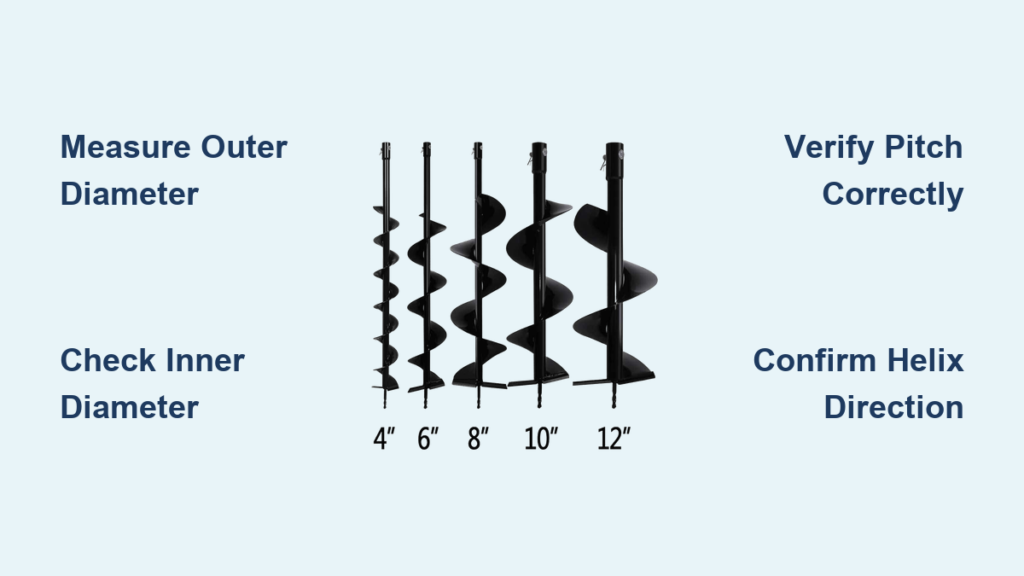
When drilling substantial holes in hardwood or pressure-treated lumber, use a low-speed setting combined with sharp, clean auger bits designed for the specific material. Apply consistent, moderate pressure—too much force binds the bit, while too little causes overheating. Periodically withdraw the bit to clear chips, as packed material dramatically increases required torque. For holes over 1/2″, consider using a spade bit with a stepped pilot point, which reduces initial torque requirements by up to 25%.
When to Invest in a Professional-Grade Drill
If you regularly encounter torque limitations, consider upgrading to a professional model specifically engineered for high-torque applications. Modern 18V/20V MAX platforms from DeWalt, Milwaukee, and Makita offer dedicated high-torque models with brushless motors and optimized gear systems. The Milwaukee M18 Fuel High Torque impacts delivers 1,800 in-lb of breakaway torque—more than triple what most DIY drills provide. While these tools cost significantly more, they incorporate engineered safety features, superior heat management, and warranty coverage that DIY modifications can’t match.
Essential Maintenance for Consistent Torque Performance
Regular maintenance preserves your drill’s maximum torque capability. Clean the chuck mechanism monthly using compressed air to remove debris that causes slippage. Apply high-temperature synthetic grease to gear assemblies annually—this reduces internal friction by up to 30%, effectively increasing usable torque. Store batteries at 40-60% charge when not in use, as fully depleted or overcharged batteries deliver reduced power. Always allow your drill to cool between demanding tasks; sustained high-temperature operation permanently degrades motor and battery performance.
Final Note: The most effective approach to how to increase torque on drill operations combines proper technique, strategic upgrades, and task-specific optimization. By implementing these proven methods—starting with gear settings and battery upgrades—you’ll maximize your current tool’s capabilities while working safely. For professionals facing daily high-torque demands, investing in purpose-built equipment delivers superior performance with engineered safety features that modifications can’t replicate. Remember that consistent maintenance preserves torque output over your drill’s lifespan, ensuring reliable performance when you need it most.