Your circular drill bit wobbles violently, leaving ragged holes that ruin your project. That frustrating chatter isn’t your fault—it’s the inherent flaw in standard hole saw design. When the thin pilot bit flexes in its guide hole during cutting, it creates destructive vibration that tears material and wastes time. But professional woodworkers and metal fabricators have known the fix for decades: modify your setup to eliminate wobble at the source. You’ll discover three field-tested methods to transform your hole saw from a chatter machine into a precision cutting tool, whether you’re installing electrical boxes in drywall or cutting clean holes in sheet metal. Master these techniques to achieve smooth, accurate cuts on your first attempt every time.
The secret lies in replacing the unstable pilot bit with a rigid guide system. Unlike standard tutorials that ignore this critical flaw, we’ll show you exactly how to implement the drill rod method—the single most effective solution for eliminating vibration. You’ll also learn jig techniques for perfect repeat holes and the two-saw salvage method for preserving wooden plugs. No more ruined materials or wasted hours sanding rough edges. These approaches work with any standard hole saw kit and require only basic workshop tools.
Why Your Hole Saw Chatters and How to Fix It Immediately
Most DIYers blame their drill or dull blades when hole saws vibrate, but the real culprit is pilot bit flex. As teeth engage material, lateral forces make the 1/4″ pilot bit wobble inside its own hole—like a train jumping tracks. This creates a destructive feedback loop where vibration worsens the instability. Standard advice to “drill slower” only masks the symptom. The permanent solution requires replacing the unstable pilot bit with a rigid guide that spins freely without binding.
Drill Rod Method: Eliminate Wobble in 3 Steps

This technique transforms your hole saw’s performance by substituting a smooth steel rod for the standard pilot bit. Professionals use it for single-hole precision work where jigs aren’t practical.
Why it works: The drill rod spins freely in your pre-drilled 1/4″ guide hole without flexing. Unlike a cutting bit that grabs material, the smooth rod centers the saw perfectly while eliminating side-to-side movement. Users report cuts become “instantly smoother” with zero chatter.
Step-by-Step Execution:
1. Drill the guide hole first: Use a standard 1/4″ drill bit at your marked center point. Ensure this hole is perfectly perpendicular—any angle here transfers to your final cut.
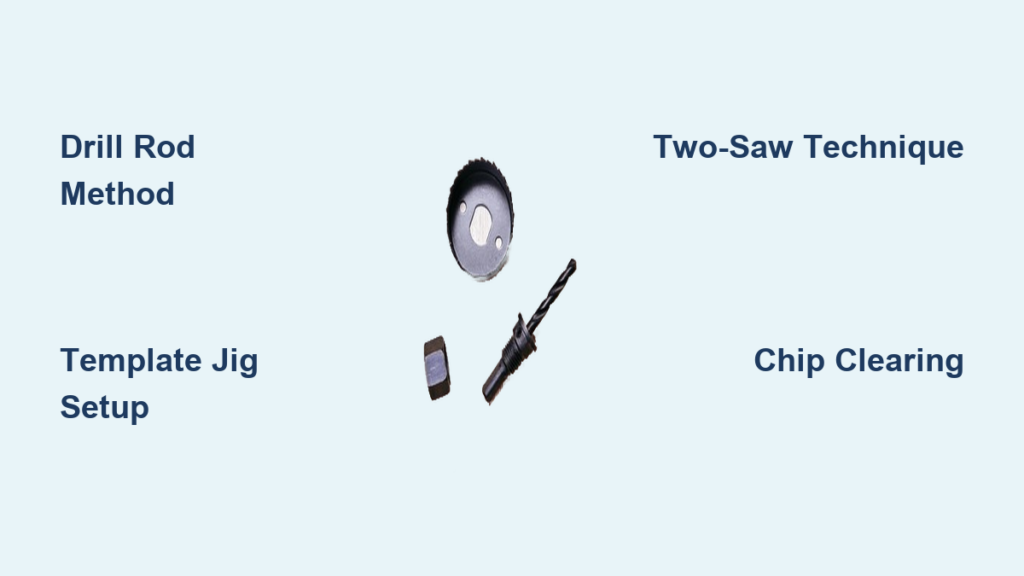
2. Insert the drill rod: Remove the pilot bit from your hole saw arbor. Slide in a 1/4″ diameter drill rod (available at hardware stores for $2) until it seats firmly.
3. Cut with controlled pressure: Start drilling at 400-600 RPM. Apply firm, steady downward force—do not push harder when resistance increases. The rod will self-center the saw, producing a clean cut in half the time of standard methods.
Pro Tip: For metal cutting, dip the drill rod tip in cutting oil before insertion. This reduces friction and prevents galling in the guide hole.
Template Jig Method for Perfect Repeated Holes
When installing multiple identical holes—like for cabinet knobs or electrical boxes—this jig technique guarantees flawless placement and perpendicularity. It’s the production method used by furniture factories.
Why it works: The jig replaces the pilot bit’s function with a physical guide bushing. Without a cutting bit to wander, the hole saw follows the jig’s path exactly. You’ll achieve identical hole placement within 1/64″ tolerance.
Building Your Jig:
1. Create the template: Cut a 6″x6″ scrap of 1/2″ plywood. Clamp it securely and drill a hole using your standard hole saw setup.
2. Modify for precision: Remove the pilot bit from your arbor. The bare arbor shaft now acts as the guide through the jig’s hole.
3. Secure and drill: Position the jig over your workpiece, aligning the hole with your mark. Clamp it firmly at all four corners. Insert the arbor through the jig and cut slowly—you’ll feel no vibration.
Critical Safety Note: Always clamp jigs securely. Unsecured templates can spin violently when the hole saw engages.
Two-Saw Technique for Salvaging Wood Plugs
:max_bytes(150000):strip_icc()/5_53_SteadyPlugCutter-bd3a709748ea40ae828557c2d5f34242.jpg)
Need intact wooden disks for projects? Standard hole saws destroy the center plug with the pilot bit. This method preserves perfect plugs while creating clean holes—ideal for furniture inlays or decorative cutouts.
How to Cut Perfect Plugs Without Pilot Holes
Why it works: One hole saw creates a sacrificial guide hole in scrap wood. A second saw (without pilot bit) uses this guide to cut your workpiece cleanly. The pilot bit never touches your final material.
Execution Sequence:
1. Make the guide block: Clamp a 2×4 scrap securely. Drill through it with your standard hole saw (pilot bit installed).
2. Attach the guide: Position this scrap block over your workpiece’s marked hole. Clamp it firmly on all sides.
3. Cut with the clean saw: Install a second hole saw (with pilot bit removed) on your arbor. Insert the arbor through the guide block’s hole and drill slowly. The plug ejects cleanly without a central hole.
Time-Saver: Label your “guide block” hole saw with tape so you never accidentally use it on final workpieces.
Fixing Common Hole Saw Problems in Under 60 Seconds
Chatter and binding ruin more projects than dull blades. These instant fixes address the root causes based on material behavior.
Why Your Hole Saw Overheats in Metal and Plastic
Problem: Aggressive teeth gum up with melted plastic or hot metal shavings, causing binding and blade damage.
Instant Fix: For metal, flood the cut with cutting oil using a squeeze bottle—never water. For plastic, drill at 300 RPM and pull the saw out every 5 seconds to clear chips. A drop of WD-40 on aluminum prevents heat buildup.
How to Remove Stuck Plugs Without Damaging the Saw
Problem: Wood or plastic plugs wedge tightly inside the saw cylinder.
Instant Fix: Modern arbors have spring ejectors—press the release lever. For older models, insert a nail punch through the side ports and tap gently with a hammer. Never use pliers on the teeth—they’ll chip.
Preventing Back-Side Tear-Out on Thin Materials
Problem: Ragged splinters on the exit side ruin finished surfaces.
Instant Fix: Clamp a sacrificial plywood scrap to the back of your workpiece. For laminate, apply painter’s tape over the cut line and drill until the pilot bit just pierces through, then flip and finish the cut from the clean side.
Material-Specific Pro Tips for Flawless Cuts
Match your technique to the material—using wood methods on metal guarantees failure. These field-tested approaches prevent common disasters.
Cutting Clean Holes in Wood Like a Cabinetmaker
Use a bi-metal hole saw with 6 TPI (teeth per inch). For fine hardwoods:
– Apply blue painter’s tape over the cut area
– Drill at 800 RPM max—higher speeds burn edges
– Stop when the pilot bit emerges, then flip and finish the cut
Critical Mistake to Avoid: Forcing the saw through the exit—this causes blowout on the back side.
Metal Cutting Without Chatter or Melting
Required Setup: Carbide-tipped hole saw + cutting oil + drill press (corded).
– Drill the pilot hole first with a step drill bit
– Apply cutting oil every 3 seconds of drilling
– Run at 250 RPM for steel, 400 RPM for aluminum
Pro Warning: Never use hole saws on stainless steel—the heat will destroy the blade instantly.
Plastic and Laminate: Stop the Cracking
Special Technique: Run your drill in reverse for the first 2 seconds to “melt” a clean groove, then switch to forward rotation. Always:
– Clamp material between two wood scraps
– Use a diamond-grit hole saw for acrylic
– Drill at 350 RPM with frequent chip clearing
When to Choose Alternative Tools Over Hole Saws
Hole saws excel for 1″-4″ holes but fail beyond this range. Save time by switching tools early.
For Holes Over 4 Inches: Circle Cutters Beat Hole Saws
A circle cutter with a beam compass attachment creates perfect large circles in wood without vibration. Install the center pin, set your radius, and rotate slowly—no drill required. For plywood, this method prevents tear-out that hole saws cause.
For Precision Flat-Bottomed Holes: Use Forstner Bits
Hole saws leave concave bottoms that ruin hinge installations. Forstner bits create perfectly flat, smooth holes ideal for:
– Cabinet hinges
– Dowel joinery
– Inlay work
Key Advantage: They cut overlapping holes without deflection.
Final Note: The drill rod method solves 90% of hole saw problems in one modification—keep a 6″ rod in your drill kit. For production work, build jigs during your first cut to guarantee perfection on subsequent holes. Always clear chips frequently and match tooth count to your material: 4-6 TPI for wood, 8-10 TPI for metal. When vibration starts, stop immediately—forcing a dull blade risks dangerous kickback. With these techniques, you’ll transform frustrating projects into professional results with clean, chatter-free cuts on your first attempt.