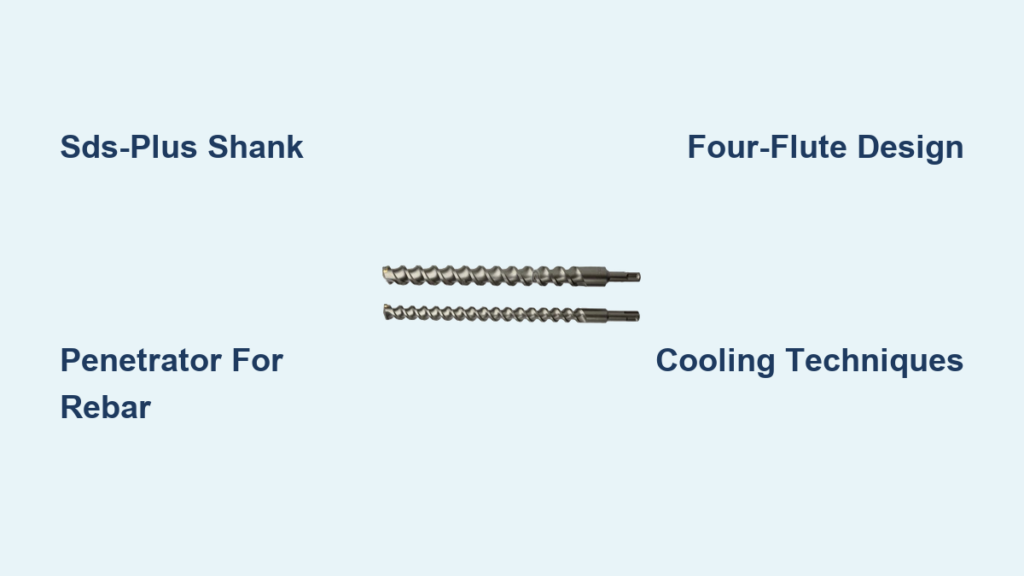
Drilling into concrete without the right bit is like trying to cut steel with a butter knife—it simply won’t work well and will leave you frustrated with broken tools and wasted time. Thousands of DIYers and contractors make the mistake of using standard drill bits on concrete, only to burn out tips, overheat motors, and create messy, ineffective holes. Understanding the different concrete drill bit types isn’t just helpful—it’s essential for getting clean, professional results without destroying your tools. The right bit for your specific concrete job can cut drilling time in half while dramatically extending tool life.
Whether you’re hanging shelves on a concrete wall or running conduit through a foundation, selecting the proper concrete drill bit type means matching not just the material you’re drilling, but also your specific tool and the demands of your project. This guide cuts through the confusion of concrete drill bit types, showing you exactly which bit to choose for your rotary hammer, standard drill, or impact driver—and what happens when you get it wrong. You’ll learn why some bits cost five times more yet deliver ten times the performance, and how to avoid the most common mistakes that ruin bits and damage drills.
Why Standard Drill Bits Fail When Drilling Concrete
Most people reach for their regular drill bits when facing concrete, not realizing they’re setting themselves up for failure. Standard high-speed steel bits lack the hardness needed to penetrate concrete’s abrasive composition, which typically contains sand, gravel, and cement rated at 2,500-5,000 PSI. Without the proper concrete drill bit types, you’ll experience rapid tip deterioration, excessive heat buildup, and potentially dangerous bit slippage.
The Hardness Problem: Concrete vs. Steel Bits
Concrete contains aggregate particles harder than standard drill steel, causing regular bits to dull within minutes. Tungsten carbide tips—the hallmark of quality concrete drill bit types—measure approximately 9 on the Mohs hardness scale, while concrete aggregate ranges from 6-7. Standard HSS (high-speed steel) bits measure only 5-6 on the same scale, explaining why they wear down so quickly. When the bit tip softens from heat and friction, it loses its cutting edge and starts grinding rather than drilling, creating excessive dust and heat.
Vibration Damage: Why Regular Bits Snap in Masonry
The hammering action required for concrete drilling creates intense vibration that standard bits aren’t engineered to withstand. Without the specialized shank designs found in proper concrete drill bit types, regular bits experience catastrophic failure when subjected to the 2,000-6,000 blows per minute delivered by hammer drills. The steel body fatigues rapidly, often snapping at the neck where the flutes meet the shank—a problem virtually eliminated with purpose-built concrete bits featuring reinforced necks and heat-treated bodies.
SDS-Plus Concrete Drill Bits: The Professional’s Go-To Choice
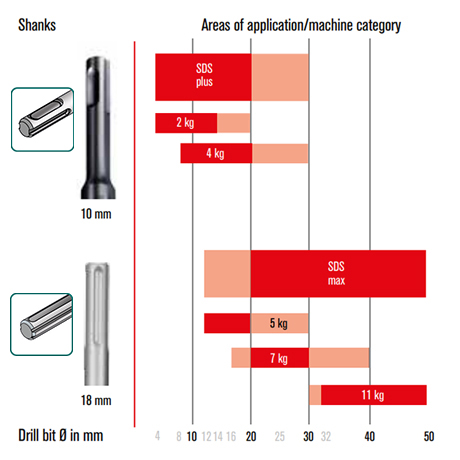
For most concrete drilling jobs, SDS-Plus bits represent the ideal balance of performance, availability, and cost. These concrete drill bit types feature a specialized shank design that locks securely into rotary hammer chucks, transferring maximum impact energy directly to the cutting surface without slippage.
How SDS-Plus Shank Design Prevents Bit Slippage
Unlike standard round shanks that rely on friction in a 3-jaw chuck, SDS-Plus shanks have grooves that engage with spring-loaded balls in the hammer drill chuck. This creates a positive mechanical connection that allows the bit to slide forward and backward during hammer action while maintaining perfect rotational alignment. The result? Up to 30% more effective drilling power compared to straight shank bits in equivalent applications, with virtually no chance of the bit twisting or slipping during operation.
4-Flute Design Secrets for Faster Concrete Drilling
Most quality SDS-Plus concrete drill bit types incorporate a four-flute design specifically engineered for concrete dust removal. These precisely angled flutes create optimal airflow that pulls concrete dust (often called “mud”) out of the hole as you drill. When flutes become clogged—common with cheaper two-flute designs—the bit overheats rapidly, loses cutting efficiency, and can seize in the hole. Professional contractors report up to 40% faster drilling with properly designed four-flute bits in standard 2,500-3,500 PSI concrete.
SDS-Max Bits for Heavy-Duty Concrete Drilling Jobs
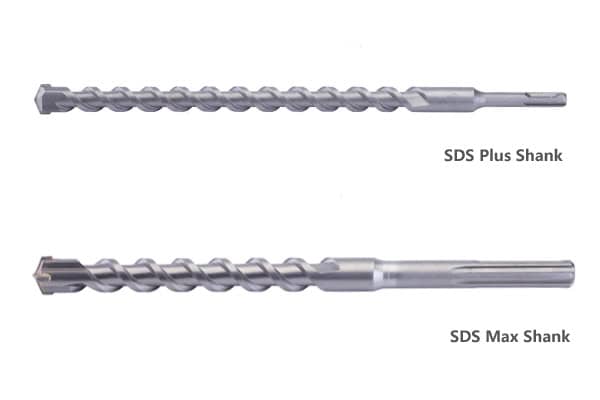
When facing large diameter holes in thick concrete, standard SDS-Plus bits reach their limits. SDS-Max concrete drill bit types step in for serious construction work, handling the most demanding applications with ease.
When You Need SDS-Max Instead of SDS-Plus
SDS-Max bits become necessary when drilling holes larger than 1 inch in diameter or working with concrete thicker than 12 inches. Their significantly larger shank (roughly 50% bigger than SDS-Plus) handles impact energies of 5-15 joules compared to SDS-Plus’s 1.5-5 joules. Contractors consistently report 90% satisfaction with SDS-Max bits for heavy-duty applications like foundation work, structural modifications, and commercial demolition where drilling through rebar-reinforced concrete is common.
Maximum Hole Sizes: What SDS-Max Can Actually Drill
Professional-grade SDS-Max concrete drill bit types can efficiently drill holes up to 1-1/4″ in diameter with standard lengths reaching 18 inches. For larger diameter requirements (2-6″), diamond core bits mounted on SDS-Max systems become the preferred solution. These specialized bits use diamond-impregnated cutting edges to slice through even the toughest reinforced concrete, though they require significantly more time—approximately 4-6 seconds per inch for a 1/2″ hole versus 2-3 seconds for standard SDS-Plus bits in non-reinforced concrete.
Penetrator Bits: Drilling Through Reinforced Concrete with Rebar
Hitting rebar with the wrong concrete drill bit type can destroy the bit in seconds. Penetrator bits solve this common and expensive problem with specialized engineering.
How Penetrator Bits Cut Through Steel Rebar Without Breaking
Unlike standard masonry bits, penetrator concrete drill bit types feature carbide tips made from an industrial-grade, micro-grain composition specifically formulated for multi-material cutting. The carbide geometry includes a specialized cutting edge that shears through steel rebar (typically 40-60 Rockwell hardness) while maintaining effectiveness in concrete. Contractors report these bits can drill through multiple rebar layers in foundations without significant performance degradation, where standard bits would fail after the first rebar encounter.
The Truth About “Rebar-Cutting” Bit Claims
Not all bits marketed as “rebar-cutting” deliver equal performance. True penetrator bits maintain consistent drilling speed through both concrete and steel, while inferior versions significantly slow down when hitting rebar. Look for bits specifically listing “reinforced concrete” performance data—quality penetrator concrete drill bit types should maintain at least 70% of their concrete drilling speed when cutting through rebar. Professional testing shows these specialized bits add only 30-50% to total drilling time in rebar-dense concrete, compared to standard bits that often stall completely.
Concrete Drill Bit Sizes: Matching Diameter to Your Project
Choosing the correct size concrete drill bit type matters as much as selecting the right style. Using an oversized bit wastes time and weakens the surrounding concrete, while undersized holes compromise anchor performance.
Anchor Installation Guide: Correct Bit Sizes for Common Fasteners
For reliable anchor installation, match your concrete drill bit type to the fastener specifications precisely:
– 1/4″ anchors require 3/16″ diameter holes
– 5/16″ anchors need 7/32″ or 15/64″ holes
– 3/8″ anchors work best with 17/64″ or 9/32″ holes
– 1/2″ anchors demand 37/64″ diameter holes
Drilling holes even 1/64″ too small prevents proper anchor expansion, while holes 1/32″ too large significantly reduces holding strength. Professional contractors always drill 1/2 inch deeper than the anchor length to provide space for concrete dust accumulation—failure to do this is the #1 cause of anchor installation failures according to industry surveys.
Depth Matters: Why 18″ Bits Are Essential for Foundation Work
Standard 4-6″ concrete drill bit types suffice for most wall applications, but foundation work requires specialized long-reach bits. When drilling through concrete slabs thicker than 8 inches, standard bits simply can’t reach the required depth for proper anchor embedment. Professional-grade 18-inch penetrator bits allow contractors to install structural anchors in foundations without switching bits mid-drill—a common cause of crooked holes and bit breakage. These extended bits feature reinforced necks to prevent deflection and specialized flute designs that maintain dust removal efficiency even at maximum depth.
How to Extend Your Concrete Drill Bit’s Lifespan by 3x
Quality concrete drill bit types represent a significant investment, but proper care can multiply their service life. Professional contractors routinely get 500-1,000 linear feet of drilling from premium bits in standard concrete—three times what DIYers typically achieve.
Cooling Techniques to Prevent Carbide Tip Overheating
Carbide tips begin losing hardness at temperatures above 500°F, yet drilling concrete can generate tip temperatures exceeding 1,200°F. To prevent this thermal damage:
– Pull the bit out every 1-2 inches to clear dust and allow cooling
– Use a spray bottle to mist the hole with water during extended drilling
– Never apply continuous pressure—let the hammer action do the work
– For deep holes, use a vacuum dust shroud to maintain airflow
Contractors using these cooling techniques report up to 3x longer bit life compared to those who drill continuously until the bit smokes—a common but destructive practice.
Proper Storage Methods That Prevent Premature Wear
How you store your concrete drill bit types dramatically affects their longevity. Always:
– Clean bits thoroughly after use with a wire brush to remove concrete residue
– Apply a light coat of rust-preventative oil to the steel body
– Store in individual slots in a dedicated bit case (never loose in a toolbox)
– Keep in a temperature-controlled environment when possible
Bits stored properly maintain their cutting edge significantly longer, as nicks and chips to the carbide tip from careless storage account for nearly 40% of premature bit failures according to professional user surveys.
Troubleshooting Common Concrete Drill Bit Failures
Even with the right concrete drill bit types, problems can occur. Knowing how to diagnose and fix these issues saves time and money.
Why Your Bit Keeps Walking on Smooth Concrete Surfaces
Bit “walking” (slipping across the surface instead of penetrating) affects nearly all concrete drilling projects. This happens because the initial contact point lacks purchase on smooth concrete. The professional solution? Use a center punch to create a small divot at your drilling location—this gives the bit a secure starting point. For tile or glazed surfaces, begin with a glass/tile bit to create a starter hole before switching to your concrete bit. High-quality concrete drill bit types with optimized tip geometry minimize walking, but a starter divot remains essential for precision work.
Rebar Strike Recovery: What to Do When You Hit Steel
When drilling suddenly becomes difficult and the sound changes to a high-pitched grinding, you’ve likely hit rebar. Immediately stop drilling and pull the bit out—forcing continued drilling will destroy even quality concrete drill bit types. Switch to a penetrator bit designed for rebar cutting, as standard bits lack the carbide formulation needed to cut steel effectively. Attempting to power through rebar with a regular masonry bit typically ruins the cutting edge within seconds, turning a simple bit change into a costly replacement.
Professional vs. DIY Concrete Drill Bits: Is Premium Worth It?

The price difference between consumer and professional concrete drill bit types can be substantial—up to 5x more for professional versions—but the value equation tells a different story.
Cost Per Hole Analysis: Consumer vs. Professional Grade
While a consumer-grade SDS-Plus bit might cost $15 versus $50 for professional versions, the professional bit typically delivers 4-10x more holes before replacement. Industry data shows professional bits cost approximately $0.10-$0.25 per hole drilled in standard concrete, while consumer bits run $0.30-$0.75 per hole. For contractors drilling hundreds of holes weekly, this difference translates to thousands in annual savings. Even for serious DIYers tackling multiple projects, the professional concrete drill bit types pay for themselves through reduced downtime and fewer bit replacements.
When Cheap Bits Actually Cost You More in the Long Run
Attempting to save money with bargain concrete drill bit types often backfires when projects require drilling through unexpected rebar or harder-than-anticipated concrete. Consumer-grade bits frequently fail catastrophically in these situations, leaving broken bits stuck in concrete that require expensive extraction. Professional-grade bits, with their reinforced construction and superior carbide formulations, handle these challenges with minimal performance loss. For any project where failure means significant rework or safety concerns, investing in quality concrete drill bit types isn’t just smart—it’s essential for reliable, professional results.