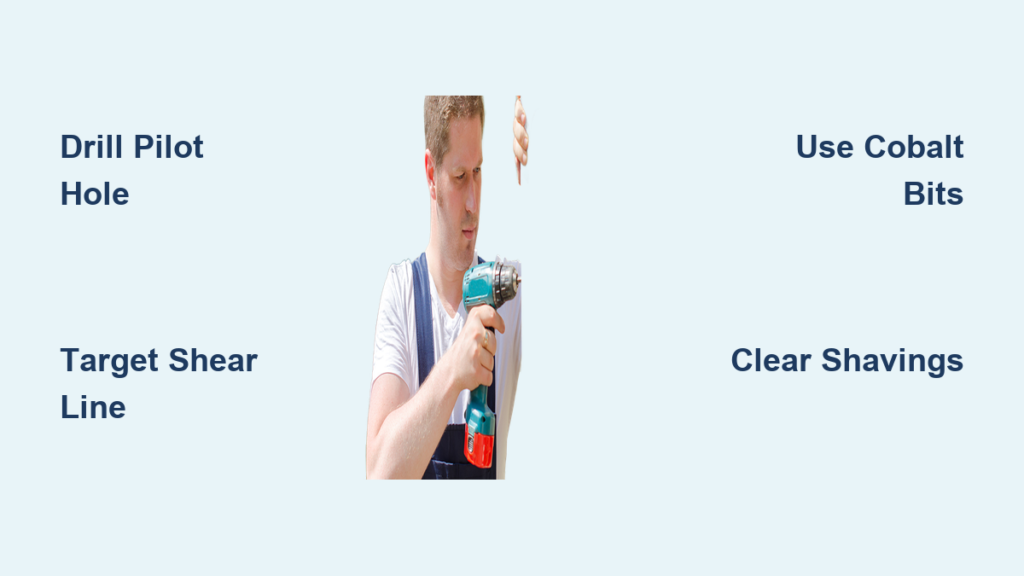
Your key snaps off inside the deadbolt. The rental house lock seizes shut with your keys inside. A lost combination padlock traps critical tools. When non-destructive methods fail, drilling out a lock becomes your last-resort lifeline—but only if done correctly. This guide reveals the exact industrial bypass technique professionals use to destroy locks without harming doors. Crucially, only attempt this on locks you legally own. Drilling permanently ruins the mechanism, demands replacement, and is illegal without authorization. If you’re locked out of your own property after exhausting alternatives, these steps will get you inside in 15 minutes with minimal mess.
Warning: Metal shavings reach 400°F during drilling. One slip can splinter your door frame. If you skip safety goggles or doubt your legal rights, stop now and call a locksmith.
Essential Drilling Tools for Clean Lock Destruction
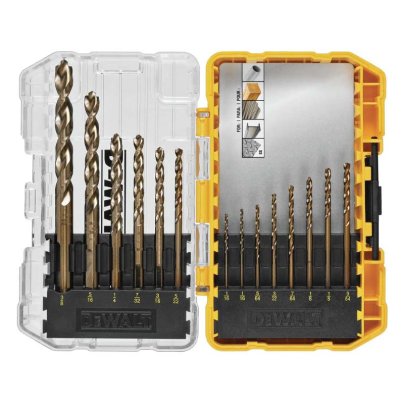
Forget hardware store basics—using wrong tools guarantees disaster. These specific items prevent door damage while destroying the lock cleanly:
- Cordless Drill (20V+): Must have variable speed (500–3000 RPM) and reverse function. Why? Low RPM prevents bit shattering; reverse clears metal shavings mid-drill.
- Cobalt Drill Bits (1/8″, 1/4″, 3/8″): Standard HSS bits melt on hardened steel security pins. Cobalt maintains sharpness at high heat.
- Center Punch & Ball-Peen Hammer: Creates a precise starting dimple. Without this, bits skate across chrome plating, gouging your door.
- Critical Safety Gear: ANSI Z87.1 safety goggles (metal fragments cause blindness), cut-resistant gloves (hot shavings embed in skin), and hearing protection.
Pro Tip: Apply cutting oil—not WD-40—to lubricate bits. WD-40 attracts dust that clogs holes. Cutting oil reduces heat by 60%, doubling bit life.
When Drilling Is Your Only Legal Option
Drill only if all these apply:
– You own the property or have written tenant/landlord permission
– Keys are confirmed lost (no spares exist)
– Lock picking, shimming, or bumping already failed
– No electronic components (smart locks require different methods)
Never drill high-security locks (Mul-T-Lock, Abloy) or automotive locks—these contain anti-drill plates that require diamond bits and risk airbag deployment. If your lock has visible hardened steel shields (shiny, non-porous metal around cylinder), call a pro.
Step-by-Step Lock Drilling Without Door Damage
Target the Cylinder’s Sweet Spot (Not the Keyhole)
Most DIYers drill randomly into the keyhole, destroying the faceplate but leaving pins intact. Correct method:
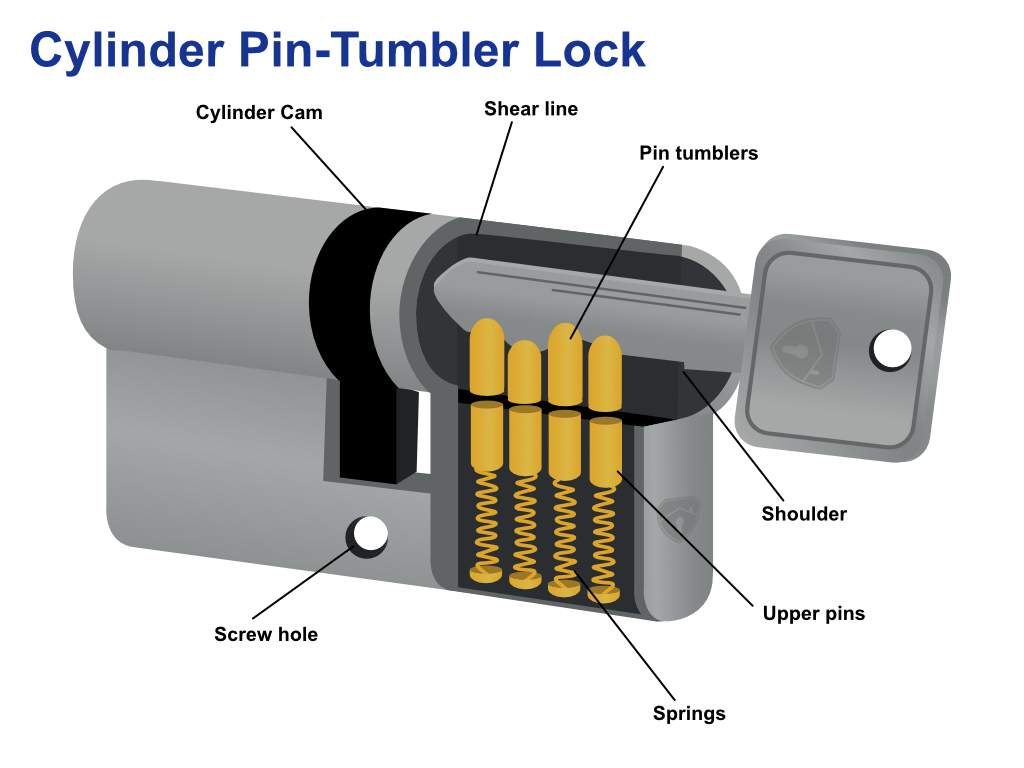
1. Locate the shear line—the critical gap where pins separate—by measuring ⅓ down from the top of the keyway.
2. Use center punch to hammer a 1/16″ deep dimple here. This anchors your drill bit.
3. Start with 1/8″ cobalt bit at 500 RPM. Drill perfectly vertical for 1 inch depth. Tilt = shattered bit.
Destroy Pins in 3 Progressive Steps
Why progressive drilling? One oversized hole cracks the cylinder housing, jamming the lock permanently.
- Pilot Hole (1/8″ bit)
Drill slowly while dripping cutting oil. Stop when metal shavings turn blue—signaling pin contact. - Shear Line Destruction (1/4″ bit)
Enlarge hole to sever driver pins. For Schlage locks: angle bit 5° downward to hit pins; Kwikset: 45° upward to target top pins. - Final Bypass (3/8″ bit)
Only if cylinder won’t turn. Drill 10-second bursts until resistance drops. Stop immediately when the core rotates freely.
Turn the Lock Using Drilled Hole—Not the Keyway
Insert a flathead screwdriver into the drilled hole (not keyway). Apply firm pressure clockwise while wiggling downward. If stuck:
– Tap screwdriver handle with hammer to jostle pins
– Spray penetrating oil into hole, wait 2 minutes
– Never force it—you’ll strip the cylinder
Lock-Specific Drilling Tactics That Actually Work
| Lock Type | Exact Drill Target | Critical Adjustment |
|---|---|---|
| Kwikset Deadbolt | ⅓ down cylinder, 45° upward angle | Target cam mechanism if stuck |
| Schlage Cylinder | Just below shear line (1/8″ below dimple) | Drill downward to shear pins |
| Padlock | Shackle pivot point (not body) | Use 3/32″ bit first—case-hardened steel requires patience |
| Euro Cylinder | Between cam and housing (side access) | Drill horizontally through cam pivot |
Avoid this mistake: Drilling padlock bodies. Most have hardened steel cores that shatter bits. Instead, target the shackle release mechanism visible at the top of the U-bolt.
Fixing Drilling Disasters in 60 Seconds
Drill Bit Won’t Bite or Overheats
- Cause: Hardened steel security pins
- Fix: Switch to cobalt bit, increase RPM to 2,500, apply 5 lbs downward pressure. Use “peck drilling”—3-second bursts with reverse clearing between.
Lock Spins Instead of Opening
- Cause: Cylinder rotating in housing
- Fix: Jam a wrench against the cylinder collar while drilling. For deadbolts, insert a screwdriver through the bolt hole to block rotation.
Metal Shavings Clogging the Hole
- Cause: Continuous drilling without clearing
- Fix: Reverse drill 5 seconds every 10 seconds. Vacuum shavings with shop vac before enlarging hole.
Post-Drilling: Replace the Lock Without Frame Damage
- Clean thoroughly: Vacuum all shavings—leftover fragments jam new locks. Wipe door with magnet to catch micro-shavings.
- Remove remnants: Unscrew interior faceplate. Pull broken cylinder straight out—don’t twist, which cracks the door edge.
- Install replacement: Match new lock’s backset (2-3/8″ or 2-3/4″) to old hole. Test bolt extension before securing screws.
Pro Tip: Upgrade to a grade 2 lock (ANSI/BHMA standard) with anti-drill pins. They’re 3x harder to defeat but still drillable in emergencies.
When to Call a Professional Immediately
Stop drilling if you encounter:
– Blue/black discoloration around cylinder (indicates anti-drill plate)
– Magnetic resistance when drilling (hardened steel rods)
– Electronic components (wires, keypads, or battery covers)
Locksmiths use rotary file extractors to bypass locks without drilling—saving your door and $150 in replacement costs. For high-security or historic doors, their $75 service call beats $300 frame repairs.
Final Note: Drilling a lock should take 8–12 minutes with the right tools. If you exceed 15 minutes, you’re damaging your door. Always photograph the lock before starting—many manufacturers provide free bypass instructions if you identify the model. Remember: This destroys the lock. Have your replacement hardware ready before drilling begins. If you lack legal rights to the property, stop—unauthorized lock destruction carries felony charges in 42 states. For non-emergency lock changes, invest in a $20 pick set; drilling is strictly for when you’re locked out with no other options.